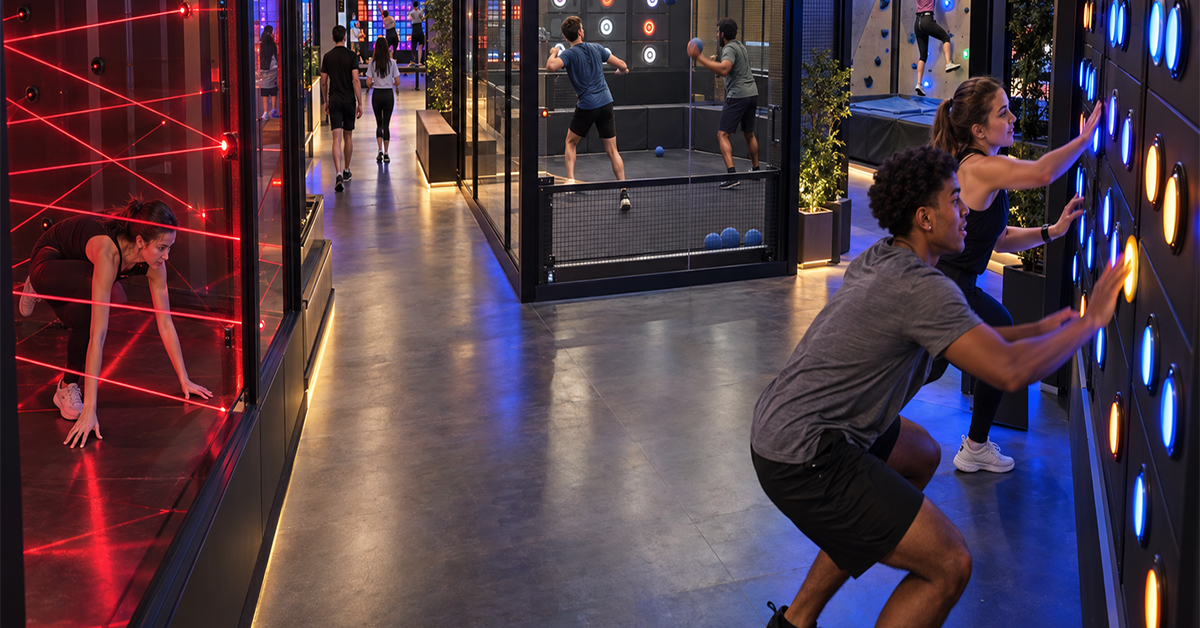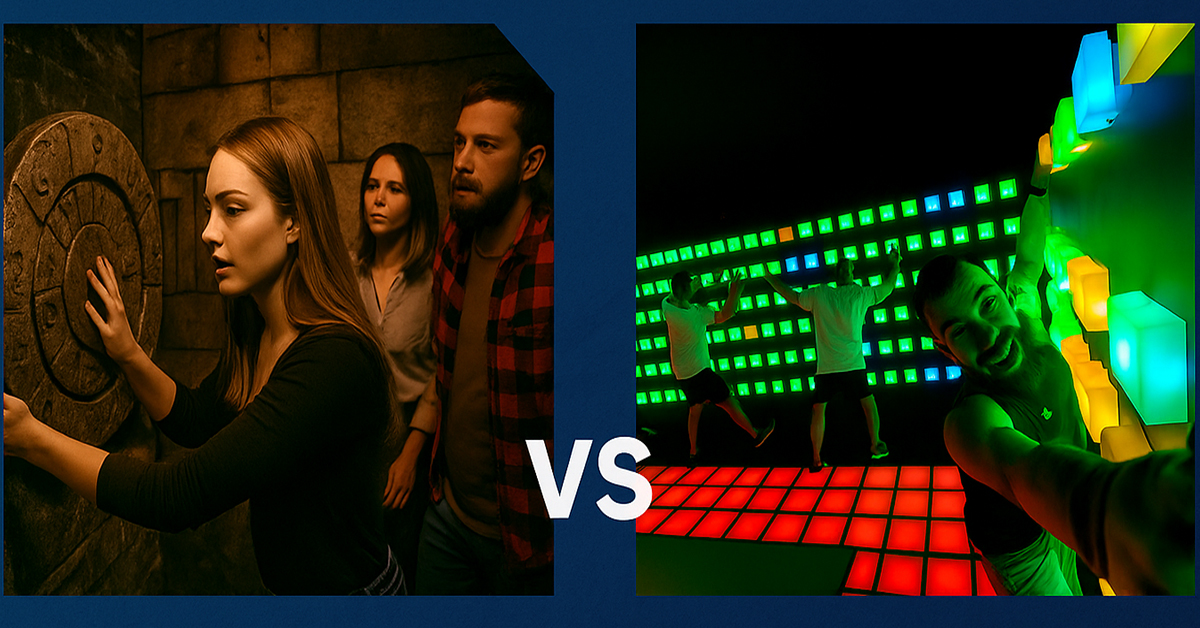


As immersive entertainment continues to expand across the globe, two formats consistently rise to the top of investor shortlists: Escape Rooms and Activate-style interactive games.
Both are proven, both are growing, and both can succeed — but their investment logic, operating model, audience behavior, and ROI profile are fundamentally different.
For kydavrplay this guide compares these two categories through the lens of North America and Europe, helping entrepreneurs, FEC owners, mall operators, and entertainment investors choose the right direction with clearer financial and operational expectations.
Why This Comparison Matters in Western Markets
Compared with many Asian markets, the US and Europe share three defining realities that strongly affect ROI:
Higher labor costs → models that depend on heavy staffing face more margin pressure.
Stronger safety/compliance expectations → especially in indoor venues and family entertainment.
Premium consumer expectations → particularly for experience quality, theming, and replay value.
This is where Escape Room businesses and Activate game arenas diverge most.
Investment Threshold: Heavy Content Assets vs. Modular Tech Assets
Escape Rooms: Content-led, Build-heavy
Escape rooms remain a content-first business. In premium US/European cities, competitive rooms often require:
-
High-quality scenic construction
-
Reliable puzzle engineering
-
Strong narrative pacing
-
Sound/lighting/automation integration
-
Continuous renovation cycles
In many Western markets, a single underwhelming theme can quickly lead to poor reviews on Google, Tripadvisor, and local listing platforms — which directly impacts bookings.
Activate Games: Modular and scalable
Activate-style venues are more likely to be built around:
-
Sensor-driven gameplay
-
Interactive floors/walls
-
Automated scoring systems
-
Software-updated challenges
The result is a model that is often easier to scale across locations and less dependent on one-time story experiences.
Operating Model: Content Refresh vs. Replay Systems
Escape Rooms Depend on Theme Cycles
Escape rooms thrive on novelty. That creates both opportunities and risks:
-
A strong theme can become a local sensation.
-
But once players complete it, the repeat rate for that specific room drops.
-
Operators must keep building or rotating scenarios to sustain momentum.
In the US especially, escape rooms also rely heavily on:
-
Corporate team building
-
Birthday packages
-
Tourist footfall in city centers
Activate Games Depend on Replay and Competition
Activate games are closer to a sports-meets-arcade model:
-
Multiple game modes
-
Score chasing
-
Family and group play
-
Seasonal events and mini-tournaments
-
Membership possibilities
This mechanic naturally supports repeat visits without rebuilding the venue.
Audience Positioning: Vertical Niche vs. All-Age Coverage
Escape Rooms: Strong in young adult + corporate segments
Escape rooms typically attract:
-
18–35 social groups
-
Date-night audiences
-
Tourists
-
Corporate teams
In Europe, culturally themed escape rooms can perform especially well in historic cities with steady visitor flow.
Activate Games: Better all-age and family integration
Activate-style experiences often appeal to:
-
Families with children
-
Teen groups
-
College communities
-
Corporate teams seeking lighter, more physical bonding
This all-age coverage makes them a natural fit for:
-
FECs
-
Shopping malls
-
Mixed-use entertainment hubs
-
Suburban or high-volume family districts
ROI Cycle: The Real Difference in US & Europe
In Western markets, ROI is less about “which is better” and more about which model matches your location and operational strengths.
Here’s the practical pattern many operators observe:
-
Escape rooms can deliver strong ROI in urban centers if you can sustain a high-level content pipeline and excellent reviews.
-
Activate games often deliver steadier ROI in high-traffic family and group venues due to better throughput + replay value + lower content reinvestment.
Side-by-Side Comparison Table
| Dimension | Escape Rooms | Activate Games |
|---|---|---|
| Core Value | Story + puzzles + immersion | Physical + interactive + competitive gameplay |
| Initial Build | Higher theming + puzzle engineering | Tech-driven modular rooms/zones |
| Content Update Cost | High (new stories/props/rooms) | Lower (software/game-mode updates) |
| Replay Value | Moderate (new themes needed) | High (score, levels, modes) |
| Staffing Needs | Medium–high (GM + resets) | Lower–medium (tech + safety + front desk) |
| Throughput | Limited by room count and time slots | Higher due to multi-zone flow |
| Best Locations | Urban centers, tourist districts | Malls, FECs, mixed-use hubs, suburban family zones |
| Strongest Customer Segments | Young adults, tourists, corporate teams | Families, teens, group play, corporate events |
| Typical Risk | Theme fatigue, high refresh cost | Over-reliance on traffic or weak membership strategy |
| Long-Term Scalability | Moderate (content-heavy) | Strong (standardized modular expansion) |
What Works Best in the US Market?
In the United States, operators often see:
-
Escape rooms perform best in:
-
Downtown entertainment areas
-
Tourist corridors
-
Corporate dense zones
-
-
Activate games perform best in:
-
Large malls
-
Suburban family entertainment clusters
-
University-adjacent leisure districts
-
The US market also strongly rewards:
-
Group-friendly formats
-
Membership systems
-
Competitive, social-media-friendly experiences
This trend aligns naturally with Activate gameplay.
What Works Best in Europe?
European performance varies more by country and city type, but two patterns stand out:
-
Escape rooms benefit from:
-
Rich local storytelling potential
-
Historic city tourism
-
Strong puzzle culture in many regions
-
-
Activate games benefit from:
-
Family-oriented weekend leisure
-
School group activities
-
Multi-use retail and entertainment complexes
-
Europe’s stricter approach to safety and space planning can also make the standardized, modular, tech-forward approach of Activate easier to replicate across regions when correctly designed.
The Smart Strategy for Investors: A Hybrid Model
For many new venues — especially larger entertainment spaces — the best investment logic isn't picking only one.
A high-performing combination often looks like:
-
Activate zone as the high-frequency, high-throughput anchor
-
1–2 premium escape rooms as the high-value, brand-building add-on
This hybrid design creates:
-
A stable cash-flow engine
-
A headline attraction for marketing
-
Multiple ticket tiers
-
Broader audience coverage
How Kydavr Play Supports Long-Term ROI
At kydavrplay.com, our focus is on scalable, modern immersive solutions designed for sustainable returns — especially in markets where labor cost and customer expectations are high.
Our Activate-style and interactive systems are built around:
-
Modular deployment
-
High replay mechanics
-
Flexible footprint options
-
Family + group + corporate applicability
-
Technology-driven upgrade paths
This lets operators:
-
Start with a manageable investment scale
-
Expand based on demand
-
Refresh experiences without expensive reconstruction
Final Takeaway: Choose Based on Your Strengths and Your Location
If you are evaluating Escape Room vs Activate Game ROI for US or European markets:
Choose Escape Rooms if you have:
-
Strong content creation ability
-
A premium storytelling strategy
-
A location with tourism or dense corporate demand
-
A plan for sustainable theme rotation
Choose Activate Games if you want:
-
Higher replay value
-
Stronger family and group conversion
-
Easier multi-site scaling
-
Lower long-term content reinvestment
-
A model that aligns with FEC, malls, and mixed-use hubs