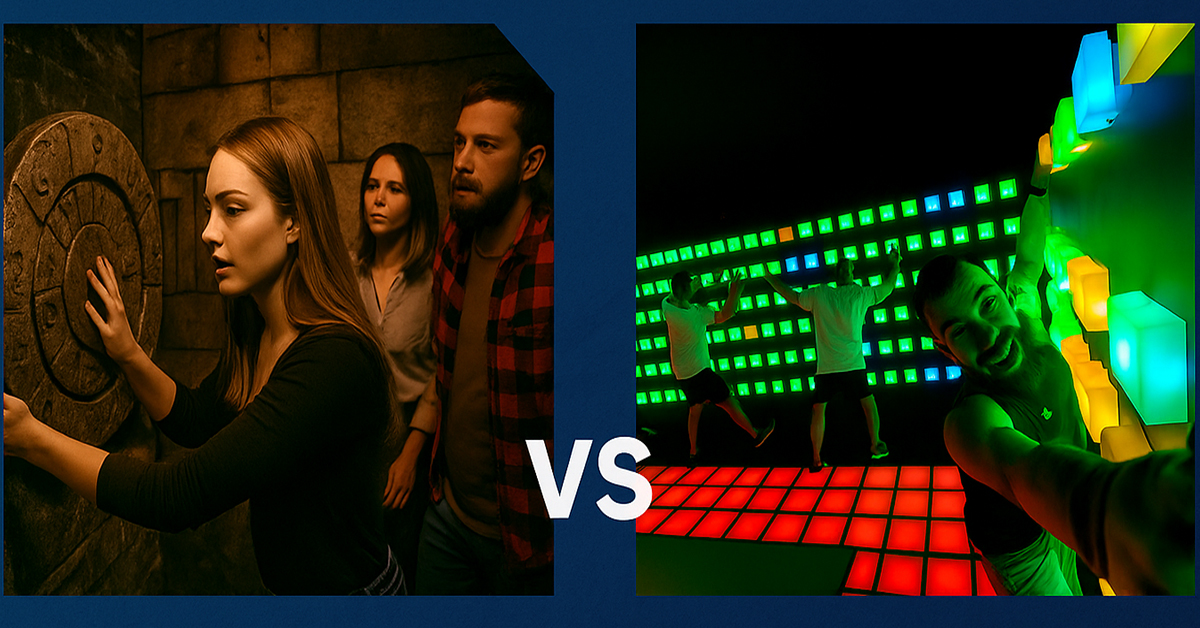

El entretenimiento en interiores está cambiando.
Durante años, un lugar de entretenimiento solía ser fácil de categorizar.
Una sala de juegos era una sala de juegos.
Una sala de escape era una sala de escape.
Un centro deportivo enfocado al deporte.
Un centro de entretenimiento familiar que combina máquinas de entretenimiento y atracciones.
Pero en 2026, los límites entre estas categorías se están volviendo menos claros.
Una nueva generación de lugares de entretenimiento combina:
Deportes digitales + Juegos activos + Desafíos de escape room + Juegos sociales competitivos + Tecnología interactiva
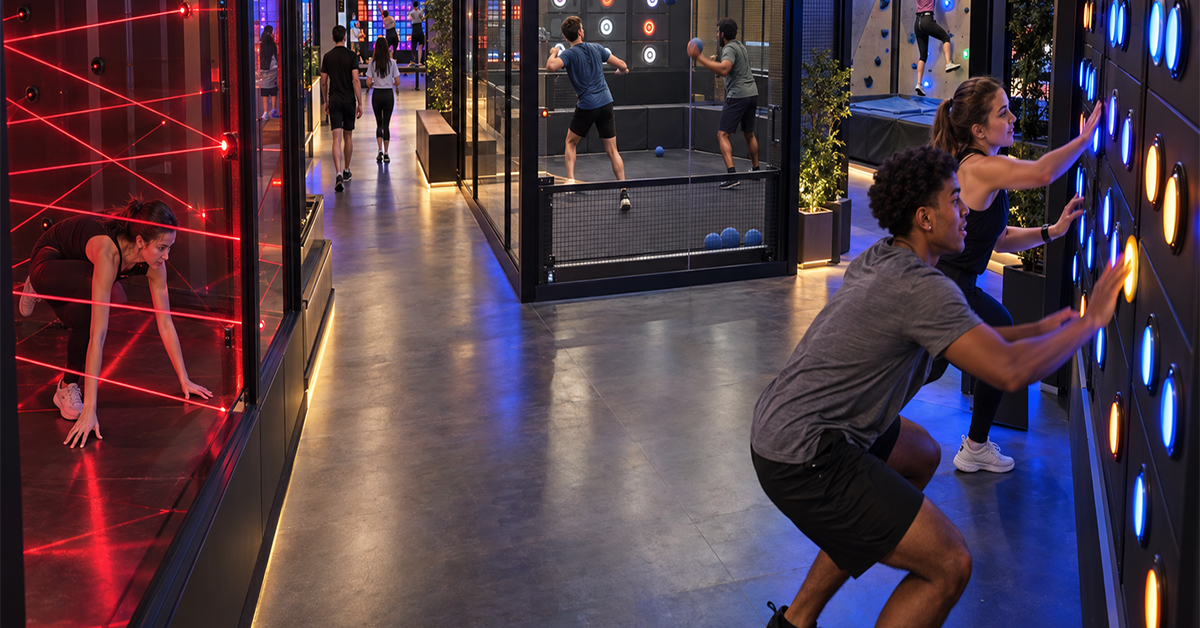
En lugar de pedir a los clientes que simplemente miren una pantalla o operen una máquina, estos lugares colocan al jugador dentro de la experiencia.
Los reproductores se ejecutan.
Saltar.
Throw.
Climb.
React.
Resolver.
Compite.
Cooperar.
Y el sistema digital responde a sus acciones en tiempo real.
Esta convergencia está creando una de las oportunidades más interesantes en el entretenimiento basado en la ubicación: el auge de los juegos activos basados en software lugar.
¿Qué son los deportes digitales?
Digital Sports combina actividad física real con tecnología interactiva, sensores, puntuación digital y mecánicas de juego.
A diferencia de los videojuegos tradicionales, los jugadores usan sus cuerpos en lugar de un controlador.
A diferencia de los deportes tradicionales, los deportes digitales pueden cambiar las reglas, los niveles de dificultad, los objetivos y la puntuación a través del software.
Los ejemplos pueden incluir:
- Baloncesto interactivo
- Retos del fútbol digital
- Entrenamiento de reacción
- Juegos de piso LED interactivos
- Juegos de tiro con pelota
- Escalada interactiva
- Desafíos de velocidad
- Competiciones deportivas multijugador
El resultado es una experiencia híbrida:
Deportes físicos + Juegos digitales
Esto es particularmente atractivo para los lugares de entretenimiento modernos porque los jugadores no necesariamente necesitan habilidades deportivas profesionales.
El objetivo es el entretenimiento ante todo.
La competencia, el movimiento y la interacción social hacen que la experiencia sea atractiva para familias, amigos, fiestas y grupos corporativos.
¿Qué es el juego activo?
Active Gaming es una categoría de entretenimiento más amplia que combina el movimiento físico con la tecnología de juegos interactivos.
Los deportes digitales pueden ser parte de Active Gaming, pero Active Gaming también puede incluir experiencias que no son deportes tradicionales.
Por ejemplo:
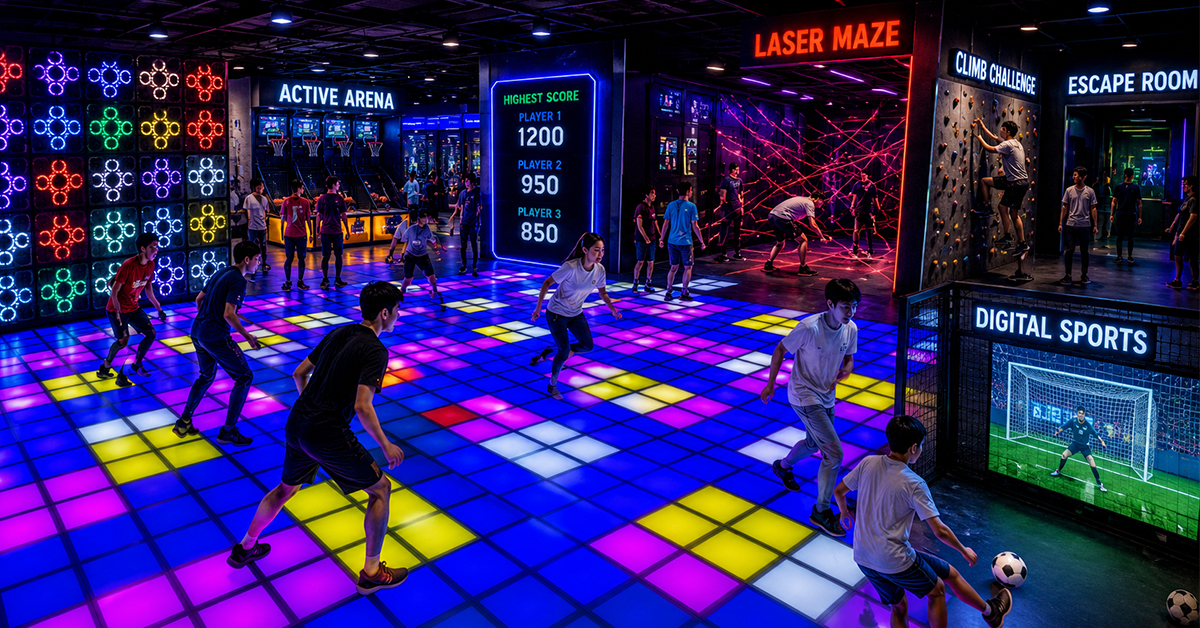
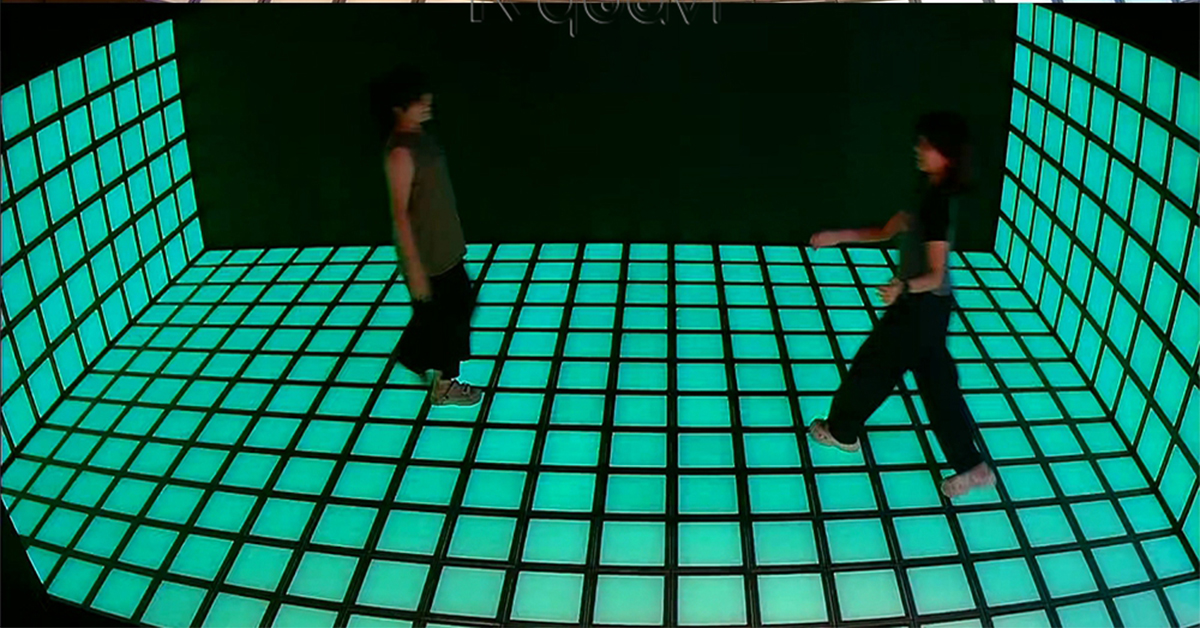
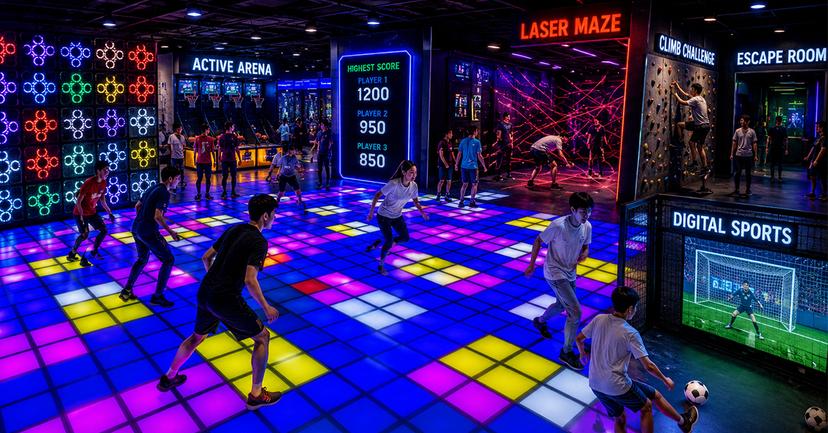
Cuadrícula de píxeles
Los jugadores se mueven a través de un piso LED interactivo, evitando zonas peligrosas, alcanzando objetivos y completando diferentes desafíos digitales.
Laser Challenge
Los jugadores navegan por obstáculos láser usando velocidad, flexibilidad y conciencia espacial.
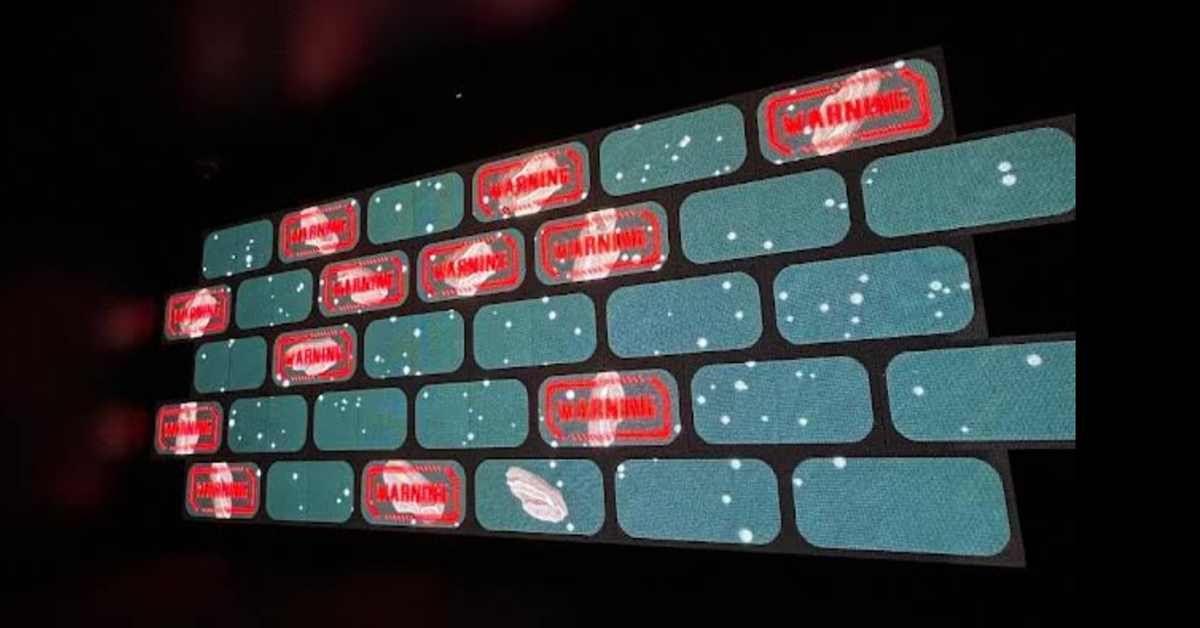
Desafío del botón pulsador
Los jugadores corren contra el tiempo para identificar y presionar objetivos iluminados.
Climb Challenge
Los jugadores combinan escalada, equilibrio, reacción y objetivos interactivos.
Ocultar desafío
Los jugadores utilizan el movimiento, la observación y la estrategia para completar misiones.
Arena
Los jugadores combinan balones, movimiento, objetivos digitales y puntuación competitiva.
Esto significa que un lugar de Active Gaming puede ofrecer mucha más variedad que un centro deportivo tradicional.
Una habitación puede probar la velocidad.
Otra prueba de memoria.
Otro requiere trabajo en equipo.
Otro se centra en la agilidad.
Otro se siente como un videojuego de la vida real.
Juntas, estas salas crean un destino de entretenimiento con múltiples experiencias.
Deportes digitales + juegos activos: una combinación poderosa
Los deportes digitales y los juegos activos funcionan particularmente bien juntos porque satisfacen dos necesidades importantes de los clientes.
La primera es la participación física.
Los clientes quieren cada vez más entretenimiento en el que puedan participar activamente en lugar de consumir contenido pasivamente.
El segundo es la gamificación.
La gente disfruta:
- Puntuaciones
- Niveles
- Clasificaciones
- Logros
- Competencia por equipos
- Registros personales
- Desafíos
La tecnología digital añade estas mecánicas de videojuegos a las actividades físicas.
En lugar de simplemente lanzar una pelota de baloncesto, los jugadores pueden competir contra un cronómetro.
En lugar de simplemente correr, los jugadores pueden evitar obstáculos digitales.
En lugar de simplemente escalar, los jugadores pueden alcanzar objetivos interactivos mientras se equilibran y reaccionan.
La actividad física se convierte en un juego.
Y el juego se vuelve mensurable.
Por qué los operadores de salas de escape deberían prestar atención al juego activo
Escape Rooms transformó el entretenimiento interior al demostrar que los clientes estaban dispuestos a pagar por experiencias inmersivas grupales.
Crearon un importante modelo de negocio basado en:
Inmersión + Trabajo en equipo + Desafíos + Límites de tiempo
But the entertainment market continues to evolve.
Traditional Escape Rooms can face several operational challenges.
A highly themed room may require substantial decoration.
Puzzle content can be expensive to redesign.
Customers who already know the solution may have limited reasons to replay the same room.
Different themes may also require different physical environments.
Active Gaming offers Escape Room operators another direction.
Instead of replacing the Escape Room model, operators can add:
physical challenges + Digital Sports + interactive games + automatic scoring + competitive gameplay.
This creates an interesting hybrid concept.
The Next Escape Room May Not Be a Traditional Escape Room
Imagine customers entering an entertainment venue.
Instead of spending 60 minutes inside one story-based room, they move through several different challenges.
Room 1:
They cross a laser maze.
Room 2:
They race across an Interactive LED Floor.
Room 3:
They complete a reaction challenge.
Room 4:
They solve a teamwork task.
Room 5:
They compete in a Digital Sports challenge.
Room 6:
They climb, balance and hit interactive targets.
Each room lasts only a few minutes.
Scores are automatically recorded.
The team continues to the next challenge.
At the end, players see their total score and ranking.
This retains some of the strongest elements of an Escape Room:
teamwork, challenge, progression and achievement.
But it adds something different:
physical activity and replayability.
This is why Active Gaming can be particularly relevant for existing Escape Room operators looking for their next attraction category.
From Escape Room to Competitive Social Gaming
Traditional Escape Rooms are primarily cooperative.
Players work together to solve a problem.
Active Gaming can combine cooperation with competition.
Two groups can compare scores.
Friends can challenge each other.
Companies can organize tournaments.
Families can compete.
Players can return to beat their previous records.
This makes Active Gaming naturally compatible with Competitive Social Gaming.
The experience is not only about completing the room.
It becomes:
Can we score higher next time?
That simple question can create a powerful reason to return.
Why Entertainment Venues Are Becoming More Hybrid
The traditional entertainment venue was often built around one primary attraction category.
The future is likely to be more flexible.
A modern Entertainment Venue can combine:
Active Gaming
Interactive physical challenge rooms.
Digital Sports
Technology-enhanced sports and ball games.
Escape Room Elements
Teamwork, problem-solving, missions and progression.
Interactive LED Floors
Software-controlled physical gaming environments.
Competitive Social Gaming
Group activities designed around competition and social interaction.
Party & Team Building
Structured packages for birthdays, schools and corporate customers.
The advantage of this hybrid approach is audience diversity.
The same venue can potentially attract:
families during weekends, corporate groups during weekdays, teenagers after school, birthday parties, tourists and groups of friends.
That makes the venue more than a single attraction.
It becomes a multi-purpose entertainment destination.
Software Is Becoming the Core of the Entertainment Venue
The biggest transformation, however, is happening behind the attractions.
Hardware creates the physical experience.
Software connects everything.
In a modern Active Gaming center, software can potentially manage:
- Player registration
- RFID wristbands
- Game activation
- Difficulty levels
- Scores
- Player history
- Leaderboards
- Online booking
- Membership
- Game updates
- Multi-room management
- Multi-store management
- Operational data
This changes how operators should evaluate entertainment equipment.
The question should not only be:
“What hardware am I buying?”
It should also be:
“What entertainment platform am I building?”
One Player Identity Across the Entire Entertainment Venue
Imagine a customer arriving at an Active Gaming center.
The player registers once.
They receive an RFID wristband.
That wristband becomes their identity throughout the venue.
The customer can then move through:
Pixel Grid → Laser → Arena → Push → Climb → Digital Sports → Other Challenges
Their performance can be associated with one player profile.
The system can record:
Player → Game → Score → Level → Ranking
This creates continuity between different attractions.
Instead of playing unrelated machines, customers participate in one connected gaming journey.
This is much closer to the logic of a modern video game.
Why Leaderboards Matter for Digital Sports and Active Gaming
Digital Sports becomes more engaging when performance is measurable.
How fast were you?
How accurate were you?
How many targets did you hit?
What was your score?
Where does your team rank?
These questions transform physical activity into competition.
A leaderboard can encourage players to:
- Play again
- Improve their score
- Challenge friends
- Create teams
- Join tournaments
- Return to the venue
For an Entertainment Venue, this can turn a single visit into an ongoing relationship.
The Interactive LED Floor Is Becoming a Digital Sports Platform
Interactive LED Floors are often associated with Floor Is Lava-style games.
But their potential is much broader.
A programmable LED Grid can become different experiences through software.
One moment it can be:
Floor Is Lava.
The next:
a reaction game.
Then:
a team competition.
Then:
a memory challenge.
Then:
a Digital Sports training game.
The physical hardware remains largely the same.
The software changes the experience.
This illustrates one of the biggest advantages of software-driven entertainment:
The same physical space can support multiple game experiences.
Active Gaming Can Improve Replayability
Replayability is one of the most important factors in an Entertainment Venue business.
A beautiful attraction may generate strong initial interest.
But what happens after the customer has already experienced it?
Active Gaming can create repeat-play motivation through:
- Different difficulty levels
- Multiple game modes
- New challenges
- Player rankings
- Team competition
- Personal records
- Software updates
- Seasonal events
The physical room does not always need to change.
The challenge can change.
This is fundamentally different from attractions that depend almost entirely on fixed physical scenery.
Automation Can Help Entertainment Venues Operate More Efficiently
Labor is a major operating cost for many entertainment businesses.
That makes automation increasingly valuable.
A connected Active Gaming system can potentially create a customer journey such as:
Online Booking → Check-In → RFID Wristband → Game Selection → Automatic Game Activation → Scoring → Leaderboard
Staff remain important for:
- Customer service
- Safety
- Technical support
- Group management
- Venue operations
But software can automate repetitive processes.
This allows operators to focus human resources where they create the most value.
Data Can Make an Entertainment Venue Smarter
Connected entertainment equipment can also produce operational data.
Operators can analyze questions such as:
Which Active Gaming room is most popular?
Which Digital Sports game receives the most repeat plays?
Which challenge is too difficult?
When is the Entertainment Venue busiest?
Which attractions should be updated?
Which games are best for team-building customers?
This information can help operators improve the venue over time.
The attraction is no longer simply installed and forgotten.
It becomes measurable and optimizable.
Who Can Benefit From Digital Sports and Active Gaming?
The potential market extends beyond traditional FECs.
Escape Room Operators
Add physical and replayable challenges to an existing business.
Family Entertainment Centers
Create new attractions for families, teenagers and groups.
Shopping Mall Entertainment Venues
Build technology-driven attractions designed for repeat visits.
Trampoline Parks
Combine existing physical activities with Digital Sports and interactive games.
Indoor Sports Centers
Add entertainment-focused Digital Sports experiences.
Corporate Team-Building Venues
Create measurable group challenges involving teamwork and competition.
Indoor Adventure Parks
Integrate climbing, reaction, laser and interactive challenges.
New Entertainment Investors
Build a new venue around a complete Active Gaming ecosystem rather than isolated amusement machines.
What Should You Look for in an Active Gaming Manufacturer?
If you are planning a new Entertainment Venue, Escape Room upgrade or Digital Sports project, equipment price should not be the only consideration.
Operators should ask:
How many game experiences are available?
Does the manufacturer develop its own software?
Can Digital Sports and Active Gaming rooms operate under one system?
Is an RFID wristband system available?
Can scores be connected across different rooms?
Does the platform include a leaderboard?
Can the games be updated?
Can language and branding be customized?
Does the system support online booking?
Can multiple Entertainment Venues be managed centrally?
Does the supplier provide OEM/ODM services?
What after-sales support is available?
The objective is not simply to purchase equipment.
The objective is to build a sustainable entertainment business.
Kydavrplay: Active Gaming, Digital Sports and Interactive Entertainment Solutions
Kydavrplay develops integrated solutions for the next generation of indoor Entertainment Venues.
The Kydavrplay ecosystem includes 50+ Active Gaming and interactive challenge game concepts, covering multiple categories such as:
- Interactive LED Floor games
- Digital Sports
- Reaction challenges
- Laser games
- Climbing challenges
- Physical adventure games
- Team competition
- Puzzle and skill challenges
- Multiplayer experiences
Different game rooms can be integrated with software systems supporting player identification, scoring, rankings and venue operations.
The objective is to help operators move beyond isolated entertainment equipment and build a connected Active Gaming ecosystem.
From Equipment Supplier to Entertainment Solution Provider
There is an important difference between selling equipment and building an Entertainment Venue.
An equipment supplier asks:
“Which machine do you want?”
A solution provider should ask:
“What business are you trying to build?”
For example:
An Escape Room operator may need physical challenges that complement existing puzzle rooms.
A trampoline park may need Digital Sports attractions that increase the variety of activities.
An FEC may need multiplayer games suitable for families and birthday parties.
A new investor may need a complete Active Gaming venue with multiple rooms, RFID wristbands, scoring and booking.
Different businesses require different combinations.
This is why Kydavrplay focuses on a broader Active Gaming solution rather than one individual product.
What Will the Entertainment Venue of 2027 Look Like?
The next generation of Entertainment Venues may look very different from traditional arcades.
Customers enter using a digital reservation.
A wristband identifies them.
They enter an Interactive LED Floor challenge.
Their score is recorded.
Next comes a Digital Sports game.
Then a Laser challenge.
Then an Escape Room-style teamwork mission.
Then an Arena competition.
Every activity contributes to their overall score.
At the end, the group sees its ranking.
A week later, they return.
Their player identity is still there.
But the challenge is different.
That is the direction in which physical entertainment and digital gaming are converging.
Physical Entertainment Is Becoming Digital
The future of entertainment is not purely digital.
And it is not purely physical.
It is phygital.
Digital Sports brings game mechanics into physical activity.
Active Gaming turns the player's body into the controller.
Escape Room concepts bring teamwork and problem-solving.
Competitive Social Gaming creates a reason to play together.
Software connects everything.
For Entertainment Venue operators, this creates a new opportunity:
Don't simply fill a venue with equipment.
Build an environment where customers can:
Play. Mover. Competir. Conectar. Mejorar. Return.
That is the evolution from an amusement venue into an Active Gaming ecosystem.
And it may become one of the defining directions of indoor entertainment beyond 2026.