
室内娱乐正在发生变化。
多年来,娱乐场所通常很容易分类。
街机就是街机。
逃生室就是逃生室。
专注运动的体育中心
集游艺机和景点于一体的家庭娱乐中心。
但到了 2026 年,这些类别之间的界限变得越来越模糊。
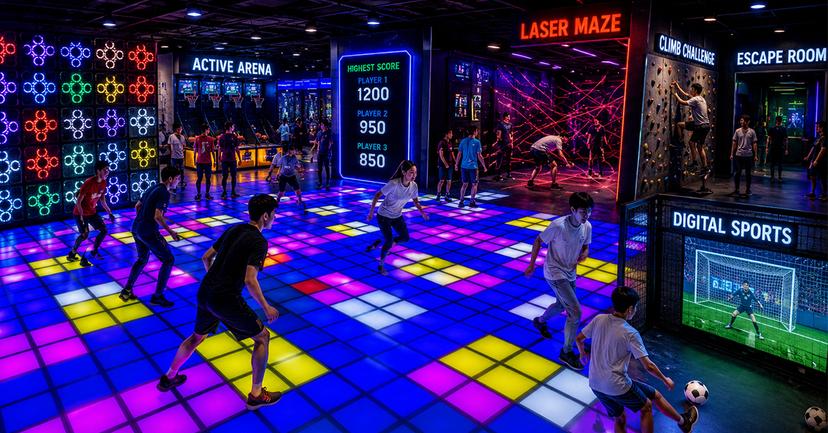
新一代娱乐场所正在组合:
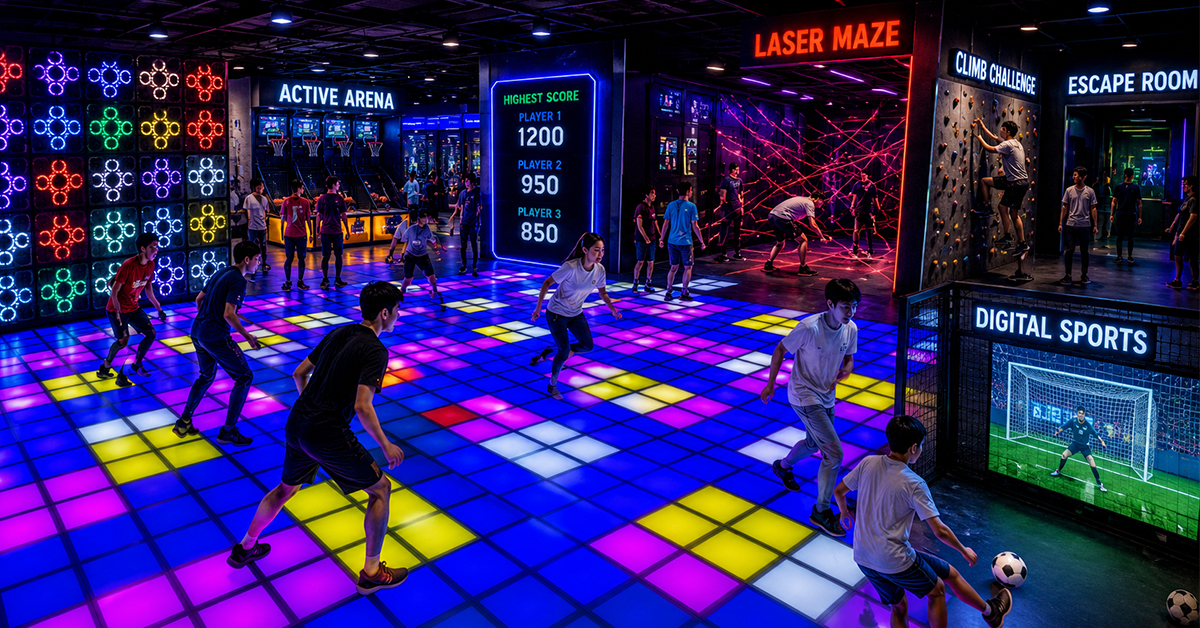
数字体育+活跃游戏+密室逃脱挑战+竞技社交游戏+互动技术
这些场所不是要求顾客简单地观看屏幕或操作机器,而是让玩家沉浸在体验中。
玩家奔跑。
跳转。
抛出。
攀爬。
反应。
解决。
参加比赛。
配合。
数字系统会实时响应他们的操作。
这种融合正在创造基于位置的娱乐领域最有趣的机会之一:软件驱动的活跃游戏场所的兴起。
什么是数字体育?
数字体育将真实的身体活动与互动技术、传感器、数字计分和游戏机制相结合。
与传统视频游戏不同,玩家使用自己的身体而不是控制器。
与传统体育不同,数字体育可以通过软件改变规则、难度级别、目标和评分。
示例可以包括:
结果是一种混合体验:
体育运动+数字游戏
这对于现代娱乐场所特别有吸引力,因为玩家不一定需要专业的运动技能。
目标是娱乐至上。
竞赛、运动和社交互动使体验吸引家人、朋友、聚会和企业团体的参与。
什么是活跃游戏?
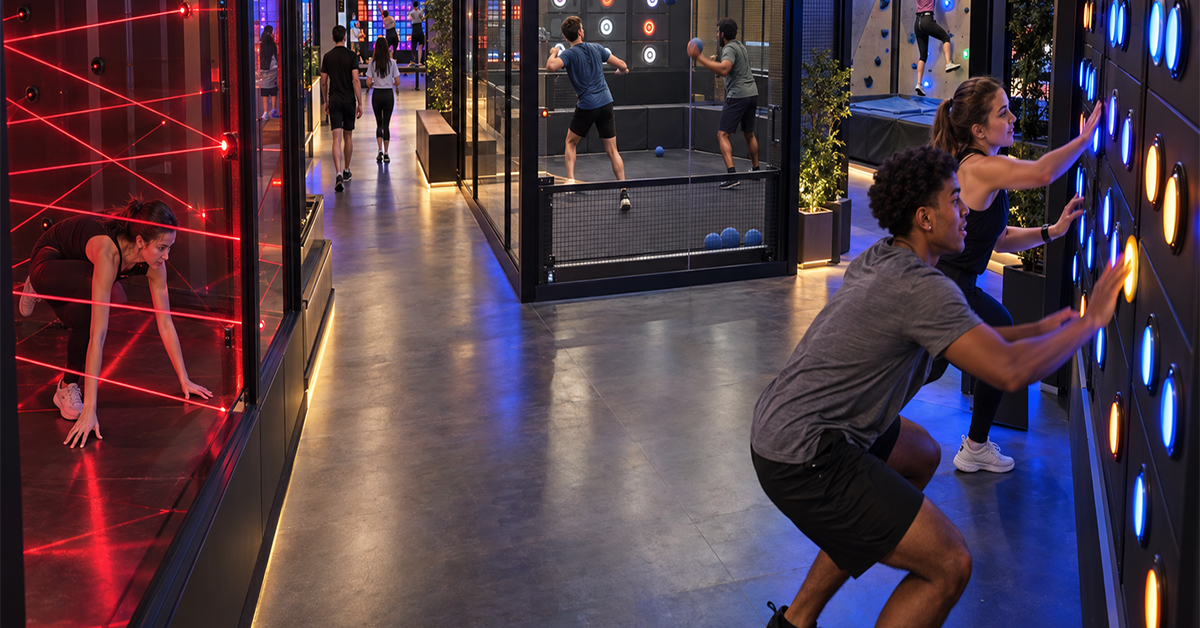
动态游戏是一种更广泛的娱乐类别,它将身体运动与互动游戏技术相结合。
数字体育可以成为 Active Gaming 的一部分,但 Active Gaming 也可以包括传统体育以外的体验。
例如:
像素网格
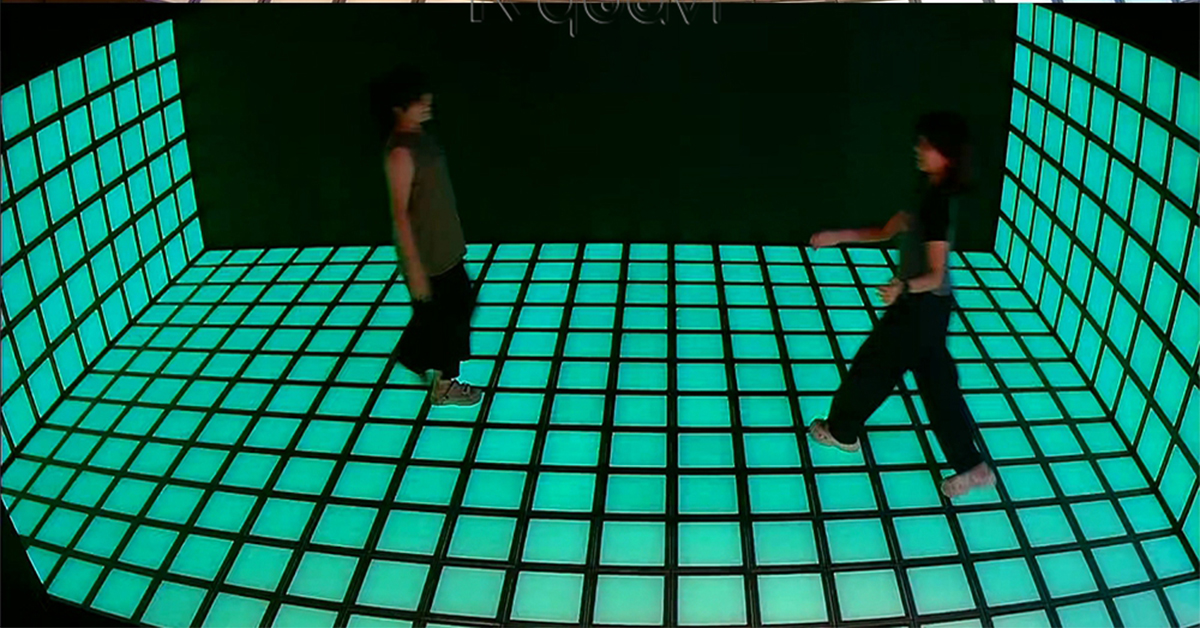
玩家在交互式 LED 地板上移动,避开危险区域,到达目标并完成不同的数字挑战。
激光挑战
玩家利用速度、灵活性和空间意识来导航激光障碍。
按钮挑战
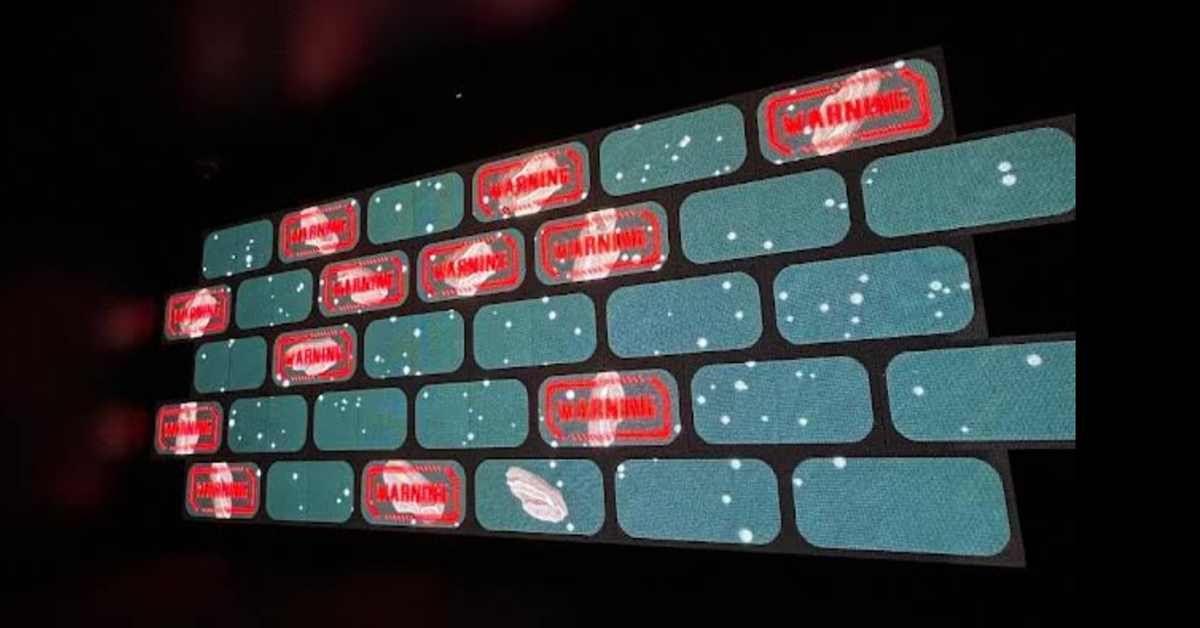
玩家与时间赛跑,找出并按下发光目标。
攀爬挑战
玩家结合攀爬、平衡、反应和互动目标。
隐藏挑战
玩家利用移动、观察和策略来完成任务。
竞技场
玩家将球、移动、数字目标和竞技得分结合起来。
这意味着 Active Gaming 场地可以提供比传统体育中心更多的多样性。
一个房间可以测试速度。
另一个测试内存。
另一个需要团队合作。
另一个注重敏捷性。
另一个感觉像现实生活中的视频游戏。
这些房间共同创造了一个多体验的娱乐目的地。
数字体育+活跃游戏:强强结合
数字体育和活跃游戏能够很好地结合在一起,因为它们满足了两个重要的客户需求。
首先是身体参与。
客户越来越希望能够主动参与娱乐,而不是被动消费内容。
第二个是游戏化。
人们喜欢:
数字技术将这些视频游戏机制添加到体育活动中。
玩家可以与计时器竞争,而不是简单地投掷篮球。
玩家可以避开数字障碍,而不是简单地奔跑。
玩家不仅可以简单地攀爬,还可以在平衡和反应的同时击中互动目标。
体育活动变成了游戏。
游戏变得可衡量。
为什么密室逃脱运营商应关注活跃游戏
逃生室证明客户愿意为沉浸式、基于团体的体验付费,从而改变了室内娱乐。
他们创建了一个重要的商业模式,基于:
沉浸+团队合作+挑战+时间限制
But the entertainment market continues to evolve.
Traditional Escape Rooms can face several operational challenges.
A highly themed room may require substantial decoration.
Puzzle content can be expensive to redesign.
Customers who already know the solution may have limited reasons to replay the same room.
Different themes may also require different physical environments.
Active Gaming offers Escape Room operators another direction.
Instead of replacing the Escape Room model, operators can add:
physical challenges + Digital Sports + interactive games + automatic scoring + competitive gameplay.
This creates an interesting hybrid concept.
The Next Escape Room May Not Be a Traditional Escape Room
Imagine customers entering an entertainment venue.
Instead of spending 60 minutes inside one story-based room, they move through several different challenges.
Room 1:
They cross a laser maze.
Room 2:
They race across an Interactive LED Floor.
Room 3:
They complete a reaction challenge.
Room 4:
They solve a teamwork task.
Room 5:
They compete in a Digital Sports challenge.
Room 6:
They climb, balance and hit interactive targets.
Each room lasts only a few minutes.
Scores are automatically recorded.
The team continues to the next challenge.
At the end, players see their total score and ranking.
This retains some of the strongest elements of an Escape Room:
teamwork, challenge, progression and achievement.
But it adds something different:
physical activity and replayability.
This is why Active Gaming can be particularly relevant for existing Escape Room operators looking for their next attraction category.
From Escape Room to Competitive Social Gaming
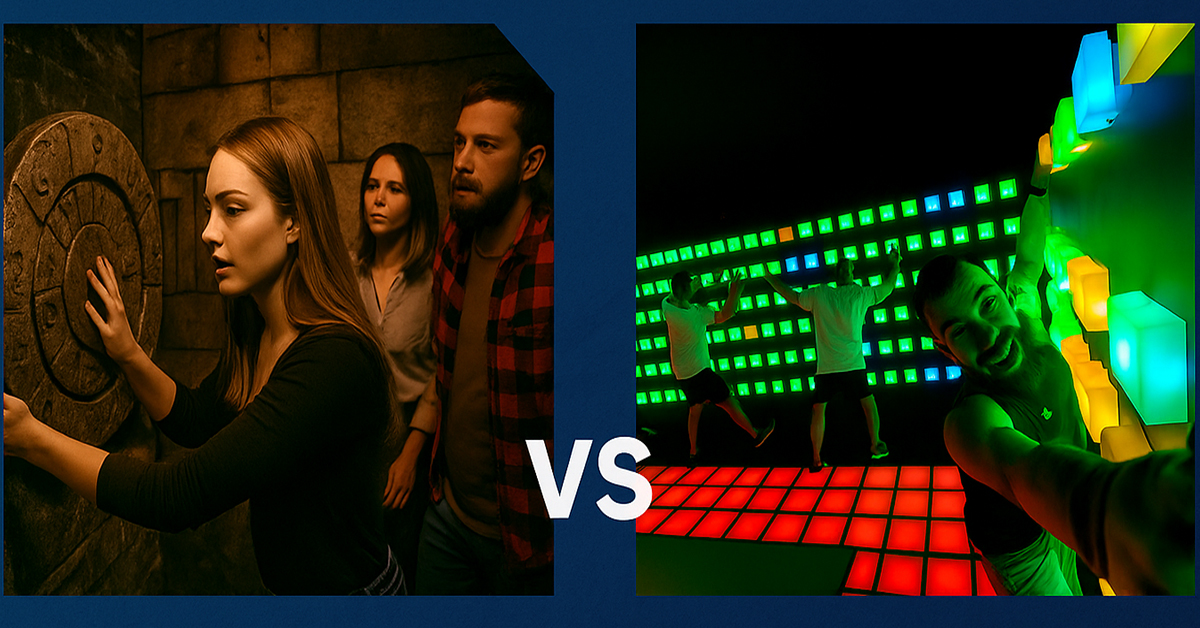
Traditional Escape Rooms are primarily cooperative.
Players work together to solve a problem.
Active Gaming can combine cooperation with competition.
Two groups can compare scores.
Friends can challenge each other.
Companies can organize tournaments.
Families can compete.
Players can return to beat their previous records.
This makes Active Gaming naturally compatible with Competitive Social Gaming.
The experience is not only about completing the room.
It becomes:
Can we score higher next time?
That simple question can create a powerful reason to return.
Why Entertainment Venues Are Becoming More Hybrid
The traditional entertainment venue was often built around one primary attraction category.
The future is likely to be more flexible.
A modern Entertainment Venue can combine:
Active Gaming
Interactive physical challenge rooms.
Digital Sports
Technology-enhanced sports and ball games.
Escape Room Elements
Teamwork, problem-solving, missions and progression.
Interactive LED Floors
Software-controlled physical gaming environments.
Competitive Social Gaming
Group activities designed around competition and social interaction.
Party & Team Building
Structured packages for birthdays, schools and corporate customers.
The advantage of this hybrid approach is audience diversity.
The same venue can potentially attract:
families during weekends, corporate groups during weekdays, teenagers after school, birthday parties, tourists and groups of friends.
That makes the venue more than a single attraction.
It becomes a multi-purpose entertainment destination.
Software Is Becoming the Core of the Entertainment Venue
The biggest transformation, however, is happening behind the attractions.
Hardware creates the physical experience.
Software connects everything.
In a modern Active Gaming center, software can potentially manage:
- Player registration
- RFID wristbands
- Game activation
- Difficulty levels
- Scores
- Player history
- Leaderboards
- Online booking
- Membership
- Game updates
- Multi-room management
- Multi-store management
- Operational data
This changes how operators should evaluate entertainment equipment.
The question should not only be:
“What hardware am I buying?”
It should also be:
“What entertainment platform am I building?”
One Player Identity Across the Entire Entertainment Venue
Imagine a customer arriving at an Active Gaming center.
The player registers once.
They receive an RFID wristband.
That wristband becomes their identity throughout the venue.
The customer can then move through:
Pixel Grid → Laser → Arena → Push → Climb → Digital Sports → Other Challenges
Their performance can be associated with one player profile.
The system can record:
Player → Game → Score → Level → Ranking
This creates continuity between different attractions.
Instead of playing unrelated machines, customers participate in one connected gaming journey.
This is much closer to the logic of a modern video game.
Why Leaderboards Matter for Digital Sports and Active Gaming
Digital Sports becomes more engaging when performance is measurable.
How fast were you?
How accurate were you?
How many targets did you hit?
What was your score?
Where does your team rank?
These questions transform physical activity into competition.
A leaderboard can encourage players to:
- Play again
- Improve their score
- Challenge friends
- Create teams
- Join tournaments
- Return to the venue
For an Entertainment Venue, this can turn a single visit into an ongoing relationship.
The Interactive LED Floor Is Becoming a Digital Sports Platform
Interactive LED Floors are often associated with Floor Is Lava-style games.
But their potential is much broader.
A programmable LED Grid can become different experiences through software.
One moment it can be:
Floor Is Lava.
The next:
a reaction game.
Then:
a team competition.
Then:
a memory challenge.
Then:
a Digital Sports training game.
The physical hardware remains largely the same.
The software changes the experience.
This illustrates one of the biggest advantages of software-driven entertainment:
The same physical space can support multiple game experiences.
Active Gaming Can Improve Replayability
Replayability is one of the most important factors in an Entertainment Venue business.
A beautiful attraction may generate strong initial interest.
But what happens after the customer has already experienced it?
Active Gaming can create repeat-play motivation through:
- Different difficulty levels
- Multiple game modes
- New challenges
- Player rankings
- Team competition
- Personal records
- Software updates
- Seasonal events
The physical room does not always need to change.
The challenge can change.
This is fundamentally different from attractions that depend almost entirely on fixed physical scenery.
Automation Can Help Entertainment Venues Operate More Efficiently
Labor is a major operating cost for many entertainment businesses.
That makes automation increasingly valuable.
A connected Active Gaming system can potentially create a customer journey such as:
Online Booking → Check-In → RFID Wristband → Game Selection → Automatic Game Activation → Scoring → Leaderboard
Staff remain important for:
- Customer service
- Safety
- Technical support
- Group management
- Venue operations
But software can automate repetitive processes.
This allows operators to focus human resources where they create the most value.
Data Can Make an Entertainment Venue Smarter
Connected entertainment equipment can also produce operational data.
Operators can analyze questions such as:
Which Active Gaming room is most popular?
Which Digital Sports game receives the most repeat plays?
Which challenge is too difficult?
When is the Entertainment Venue busiest?
Which attractions should be updated?
Which games are best for team-building customers?
This information can help operators improve the venue over time.
The attraction is no longer simply installed and forgotten.
It becomes measurable and optimizable.
Who Can Benefit From Digital Sports and Active Gaming?
The potential market extends beyond traditional FECs.
Escape Room Operators
Add physical and replayable challenges to an existing business.
Family Entertainment Centers
Create new attractions for families, teenagers and groups.
Shopping Mall Entertainment Venues
Build technology-driven attractions designed for repeat visits.
Trampoline Parks
Combine existing physical activities with Digital Sports and interactive games.
Indoor Sports Centers
Add entertainment-focused Digital Sports experiences.
Corporate Team-Building Venues
Create measurable group challenges involving teamwork and competition.
Indoor Adventure Parks
Integrate climbing, reaction, laser and interactive challenges.
New Entertainment Investors
Build a new venue around a complete Active Gaming ecosystem rather than isolated amusement machines.
What Should You Look for in an Active Gaming Manufacturer?
If you are planning a new Entertainment Venue, Escape Room upgrade or Digital Sports project, equipment price should not be the only consideration.
Operators should ask:
How many game experiences are available?
Does the manufacturer develop its own software?
Can Digital Sports and Active Gaming rooms operate under one system?
Is an RFID wristband system available?
Can scores be connected across different rooms?
Does the platform include a leaderboard?
Can the games be updated?
Can language and branding be customized?
Does the system support online booking?
Can multiple Entertainment Venues be managed centrally?
Does the supplier provide OEM/ODM services?
What after-sales support is available?
The objective is not simply to purchase equipment.
The objective is to build a sustainable entertainment business.
Kydavrplay: Active Gaming, Digital Sports and Interactive Entertainment Solutions
Kydavrplay develops integrated solutions for the next generation of indoor Entertainment Venues.
The Kydavrplay ecosystem includes 50+ Active Gaming and interactive challenge game concepts, covering multiple categories such as:
- Interactive LED Floor games
- Digital Sports
- Reaction challenges
- Laser games
- Climbing challenges
- Physical adventure games
- Team competition
- Puzzle and skill challenges
- Multiplayer experiences
Different game rooms can be integrated with software systems supporting player identification, scoring, rankings and venue operations.
The objective is to help operators move beyond isolated entertainment equipment and build a connected Active Gaming ecosystem.
From Equipment Supplier to Entertainment Solution Provider
There is an important difference between selling equipment and building an Entertainment Venue.
An equipment supplier asks:
“Which machine do you want?”
A solution provider should ask:
“What business are you trying to build?”
For example:
An Escape Room operator may need physical challenges that complement existing puzzle rooms.
A trampoline park may need Digital Sports attractions that increase the variety of activities.
An FEC may need multiplayer games suitable for families and birthday parties.
A new investor may need a complete Active Gaming venue with multiple rooms, RFID wristbands, scoring and booking.
Different businesses require different combinations.
This is why Kydavrplay focuses on a broader Active Gaming solution rather than one individual product.
What Will the Entertainment Venue of 2027 Look Like?
The next generation of Entertainment Venues may look very different from traditional arcades.
Customers enter using a digital reservation.
A wristband identifies them.
They enter an Interactive LED Floor challenge.
Their score is recorded.
Next comes a Digital Sports game.
Then a Laser challenge.
Then an Escape Room-style teamwork mission.
Then an Arena competition.
Every activity contributes to their overall score.
At the end, the group sees its ranking.
A week later, they return.
Their player identity is still there.
But the challenge is different.
That is the direction in which physical entertainment and digital gaming are converging.
Physical Entertainment Is Becoming Digital
The future of entertainment is not purely digital.
And it is not purely physical.
It is phygital.
Digital Sports brings game mechanics into physical activity.
Active Gaming turns the player's body into the controller.
Escape Room concepts bring teamwork and problem-solving.
Competitive Social Gaming creates a reason to play together.
Software connects everything.
For Entertainment Venue operators, this creates a new opportunity:
Don't simply fill a venue with equipment.
Build an environment where customers can:
Play.移动。竞争。连接。提升。 Return.
That is the evolution from an amusement venue into an Active Gaming ecosystem.
And it may become one of the defining directions of indoor entertainment beyond 2026.