
The location-based entertainment industry continues to expand, but growth is creating a new challenge for operators: attracting first-time customers is no longer enough.
The most valuable entertainment venues are those that can turn a birthday guest, family visitor or corporate participant into a repeat customer.
This is the foundation of the replay economy.
The replay economy is a business model in which an entertainment venue generates long-term revenue by giving customers continuously changing challenges, measurable progress and social reasons to return. Instead of depending entirely on new visitors, operators build recurring demand from people who have already experienced the venue.
This model is becoming increasingly important for active gaming centers, family entertainment centers, escape room operators and competitive socializing venues.
Industry research reflects the broader opportunity. Grand View Research estimates that the global location-based entertainment market will grow from USD 9.7 billion in 2026 to USD 49.2 billion by 2033. Meanwhile, JLL reports that 721 new entertainment locations representing 16.5 million square feet are planned across the United States and Canada. The expansion signals strong demand, but it also means operators must work harder to differentiate their venues.
Why One-Time Entertainment Is Becoming a Risk
Traditional escape rooms and fixed attractions can deliver a strong first experience. However, their content often remains unchanged after the customer completes the challenge.
Once players know the story, solution or route, their motivation to purchase another ticket may decline. Changing the experience can require new decoration, construction, props and testing, increasing both cost and downtime.
Active gaming follows a different content model.
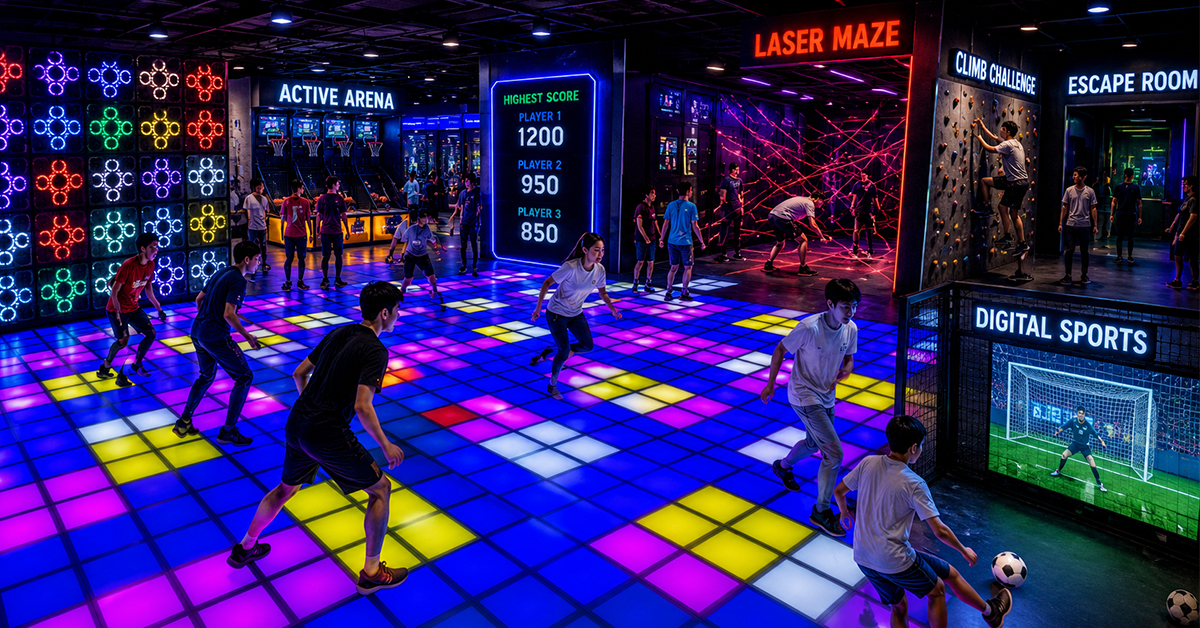
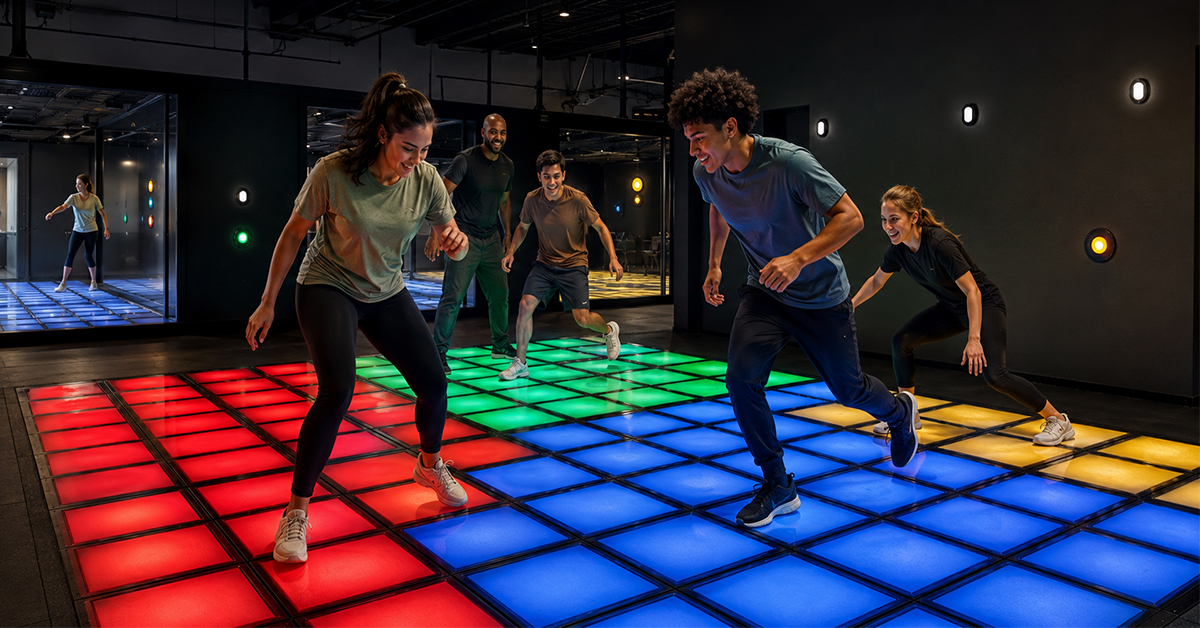
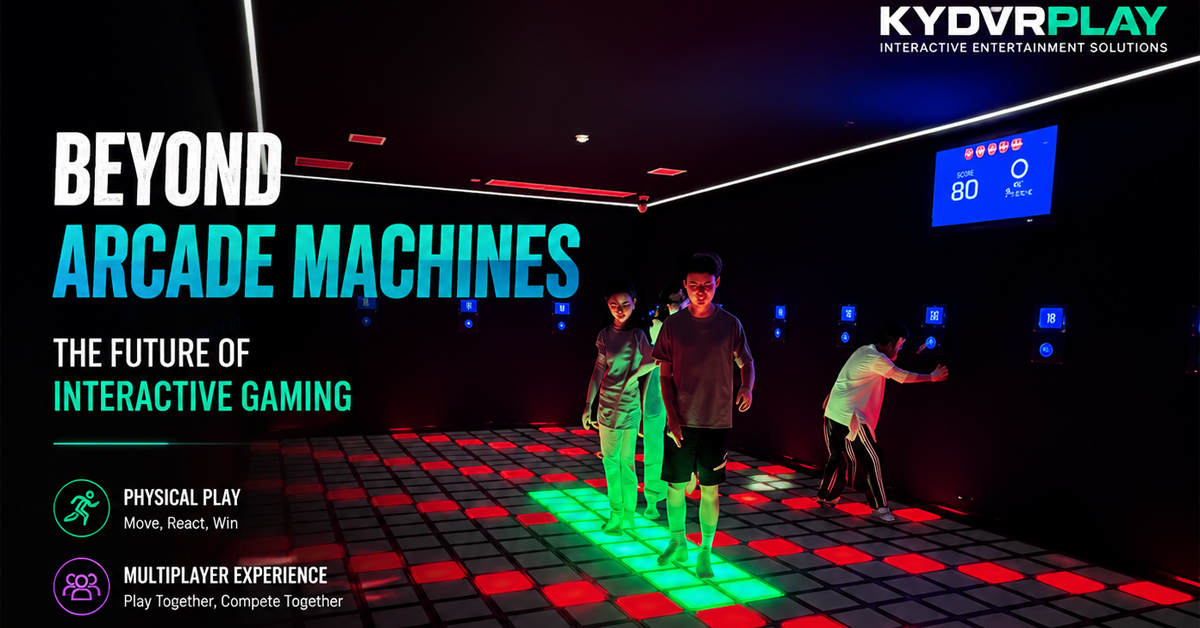
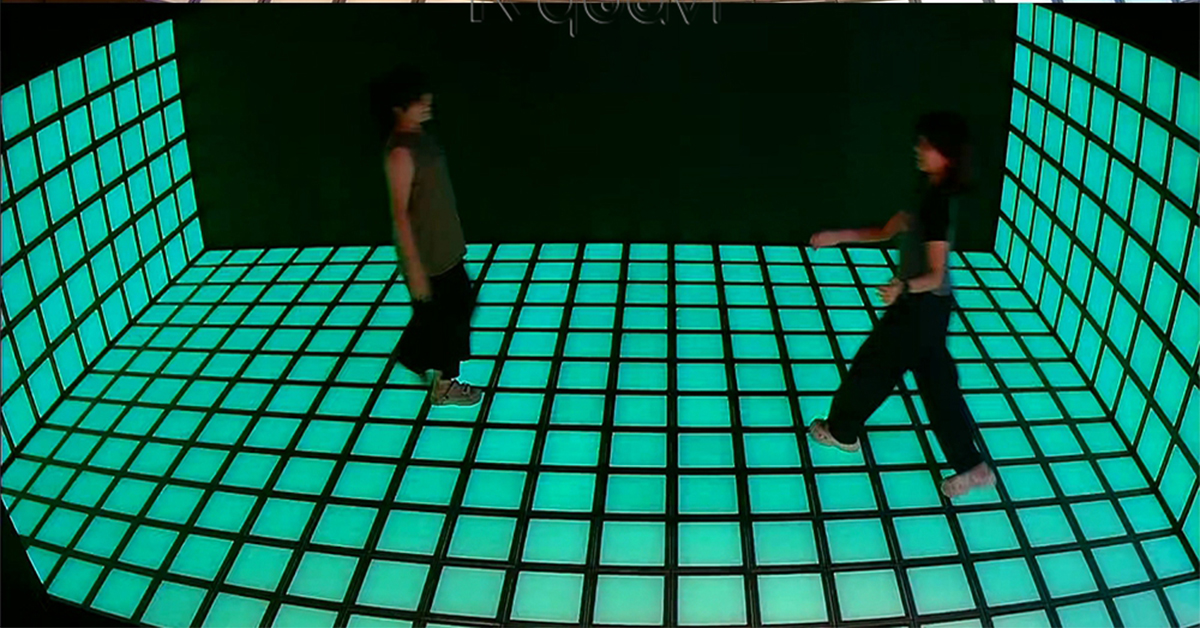
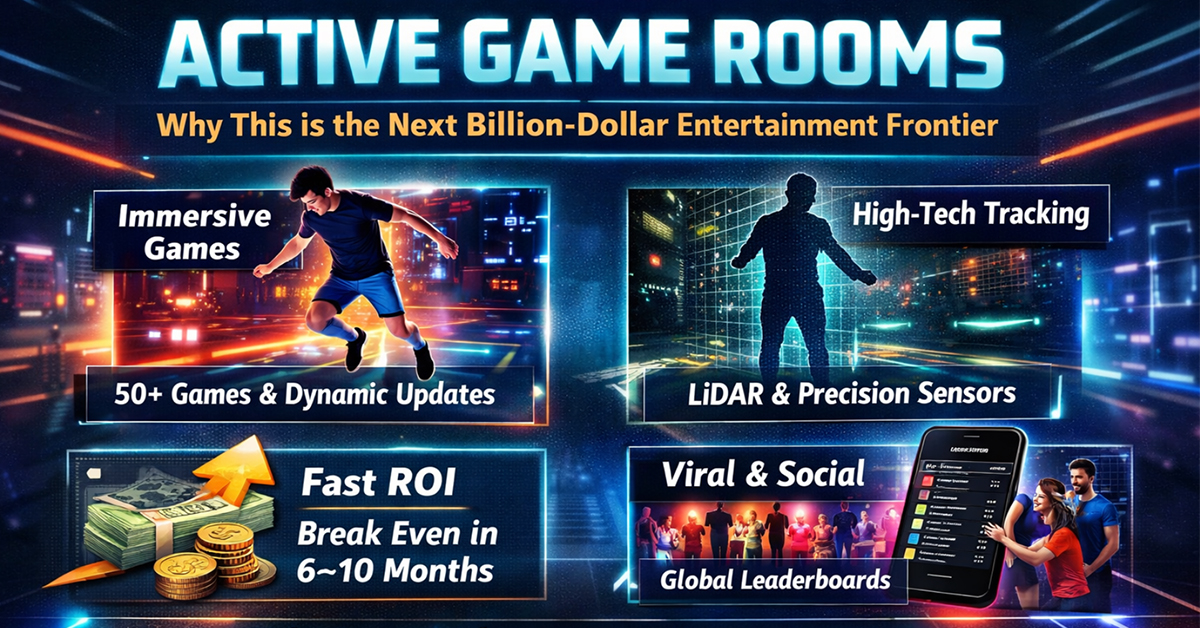
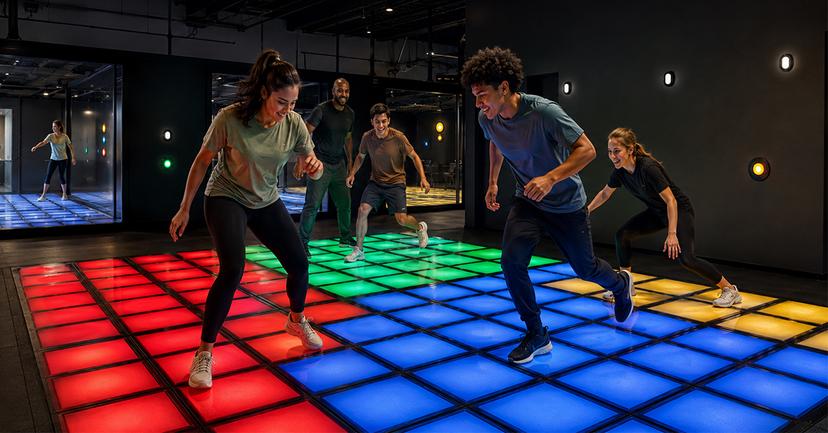
An active gaming center combines physical movement with responsive digital systems, such as interactive LED floors, sensor-based walls, laser challenges, projection games, reaction buttons and real-time scoring. The same physical room can support multiple game modes, difficulty levels and team formats.
This allows the attraction to change without rebuilding the entire venue.
The distinction is important:
- A repeatable game can be played again.
- A replayable game gives the player a meaningful reason to play again.
A player may return to improve a score, unlock a harder level, beat another team, complete a seasonal mission or reach a higher position on the venue leaderboard. These goals transform a single entertainment session into an ongoing customer journey.
Five Systems That Create Repeat Visits
1. Multiple Difficulty Levels
A replayable active game should not have only one success condition.
Beginner modes make the attraction accessible to families and first-time players. Intermediate and advanced levels give experienced guests a reason to return. Timed missions, limited lives and increasing speed can add further depth without requiring a new room.
This structure allows one attraction to serve children, teenagers, adults and experienced competitive players.
2. Personal Scores and Leaderboards
Scoring converts an activity into measurable progress.
When a player can see a previous result, personal best or team ranking, the next visit gains a clear objective. RFID wristbands or player IDs can connect results across multiple game rooms and create a continuous venue-wide experience.
Leaderboards can also support weekly competitions, school challenges, corporate tournaments and local championships.
The result is not simply more competition. It is a stronger relationship between the visitor and the venue.
3. Regular Digital Content Updates
Physical attractions are expensive to replace, but digital content can be refreshed more efficiently.
New missions, game rules, visual themes, difficulty settings and scoring targets can make an existing room feel different. Seasonal content can support Halloween, Christmas, school holidays, sports events or local celebrations.
For operators, this helps extend the commercial life of the hardware. For customers, it creates a simple message: the games may be different the next time you visit.
4. Social and Team-Based Gameplay
Active gaming is naturally suited to groups because players must move, communicate, compete and solve problems together.
A single venue can serve several customer segments:
- Families looking for an indoor activity
- Teenagers and young adults seeking social competition
- Birthday and private party groups
- Schools and youth organizations
- Corporate team-building customers
- Sports clubs and community groups
Team formats create organic replay value because the experience changes when the group changes. A player may visit once with family, again with friends and later with colleagues.
5. Memberships and Return Challenges
Membership programs are most effective when they provide goals instead of offering only discounts.
An active gaming membership could include monthly missions, priority booking, member rankings, achievement badges, birthday rewards or access to new challenges.
Operators can also create a structured return cycle:
First visit → score recorded → new challenge offered → return booking → higher difficulty unlocked → tournament invitation
This transforms customer data into a practical retention system while giving visitors a clear progression path.
Why Replayability Matters More as Competition Grows
Competitive socializing has expanded rapidly, but operators in mature markets are also warning about oversupply and difficulty encouraging repeat visits. Regularly changing activities, selecting the right location and giving guests new reasons to return are becoming increasingly important.
This means a visually impressive attraction alone may not provide a lasting competitive advantage.
A colorful LED room can generate social media attention. A replayable system can generate repeat revenue.
Before investing in an active gaming solution, an operator should therefore ask:
- How many games and difficulty levels can each room provide?
- Can content be updated without rebuilding the attraction?
- Are player scores saved across different rooms?
- Can the system support rankings and team competitions?
- Can themes and languages be adapted for the local market?
- Does the supplier provide software, hardware and after-sales support?
- Can the venue add new rooms as demand grows?
These questions help distinguish a standalone equipment purchase from a scalable active entertainment platform.
How Kydavrplay Supports the Replay Economy
Kydavrplay develops turnkey active gaming solutions for new entertainment centers and existing venue upgrades.
The product ecosystem includes interactive LED floor games, Mega Grid challenges, reaction rooms, laser games, climbing challenges, arena games, basketball games, control missions and other physical-digital attractions.
Instead of relying on one signature room, operators can combine multiple game categories to create a complete customer journey involving speed, balance, teamwork, memory, strategy and physical coordination.
Kydavrplay solutions can also integrate player identification, wristband scoring, multi-room rankings and centralized game management. A connected system allows visitors to move between rooms while maintaining one player identity and a unified performance record.
With more than 50 game-room concepts, customizable configurations and support for localized languages and branding, Kydavrplay helps operators create their own entertainment identity rather than being limited to a standardized franchise model.
The objective is not simply to install more equipment. It is to create an active entertainment ecosystem that can continue generating new customer experiences after opening day.
Building a Venue People Want to Revisit
A practical replay-focused venue should combine three layers:
The attraction layer includes safe, reliable and visually engaging game rooms.
The content layer includes multiple challenges, difficulty levels, themes and updates.
The retention layer includes player accounts, rankings, memberships, group events and remarketing.
If one layer is missing, the venue may struggle to reach its full potential. Strong hardware without changing content can become familiar. Good games without a retention system may lose contact with previous visitors. Marketing without a distinctive experience can increase acquisition costs without building loyalty.
When all three layers work together, every visit can become the beginning of the next visit.
Conclusion: The Next Competitive Advantage Is a Reason to Return
The active entertainment market in 2026 is moving beyond the question, “How impressive is the attraction?”
The more valuable question is, “Why will the customer come back?”
Replayable game design, connected scoring, regularly updated content and social competition can help active gaming venues build recurring customer relationships instead of depending entirely on first-time traffic.
For FEC operators, escape room owners, shopping malls and entertainment investors, the winning model will not necessarily be the venue with the most expensive decoration. It will be the venue that can deliver the greatest number of fresh, measurable and shareable experiences from the same space.
Kydavrplay provides customizable active gaming rooms, integrated software and hardware, player management systems and turnkey project support for operators building the next generation of replayable entertainment venues.
Contact Kydavrplay to develop an active gaming center designed not only to attract visitors—but to bring them back.
FAQ
What is the replay economy in active gaming?
The replay economy is an entertainment business model that increases repeat visits by giving players changing challenges, saved scores, higher difficulty levels, rankings and new content. It helps a venue earn more revenue from existing customers instead of relying only on first-time visitors.
How do active gaming centers encourage customers to return?
Active gaming centers encourage repeat visits through digital content updates, multiple difficulty levels, RFID player accounts, leaderboards, team competitions, seasonal challenges and membership rewards.
Why are active game rooms more replayable than traditional escape rooms?
Active game rooms can provide different missions, levels and scoring goals within the same physical space. Traditional escape rooms usually depend on a fixed story and puzzle solution, making repeat visits more difficult unless the room is redesigned.
What systems should an active gaming venue include?
A modern active gaming venue should include interactive game rooms, centralized software, player identification, real-time scoring, multi-room leaderboards, booking support and regularly updated game content.
Can an existing entertainment center add active gaming rooms?
Yes. Escape rooms, family entertainment centers, trampoline parks, arcades and indoor playgrounds can add individual active game rooms or build a connected multi-room zone based on their available space and target audience.