
Good entertainment concepts often look obvious only after the doors open.
Before that moment, there are months of questions. Will people understand the games? Will families and adults both enjoy them? Is the concept different enough from an arcade? Can it bring customers back after their first visit? And, perhaps most importantly, is the supplier capable of supporting an entire venue rather than delivering a few attractive machines?
Those were the kinds of questions behind a new active gaming project in Qatar.
The owner was already familiar with location-based entertainment. Having operated an escape room business, the team understood how much people enjoy entering a physical space, solving problems together and becoming part of a story. They also understood the limitations of a format built around a fixed solution. Once a guest knows the answer to an escape room, the mystery is difficult to recreate.
The search for the next concept lasted more than one year. The operator reviewed the market, compared different game formats and considered how active entertainment could work for local families, friends, parties and company groups. The final decision was to cooperate with Kydavrplay on a venue built around 14 different interactive challenge rooms.
Today, that venue is open.
What Was Built in Qatar?
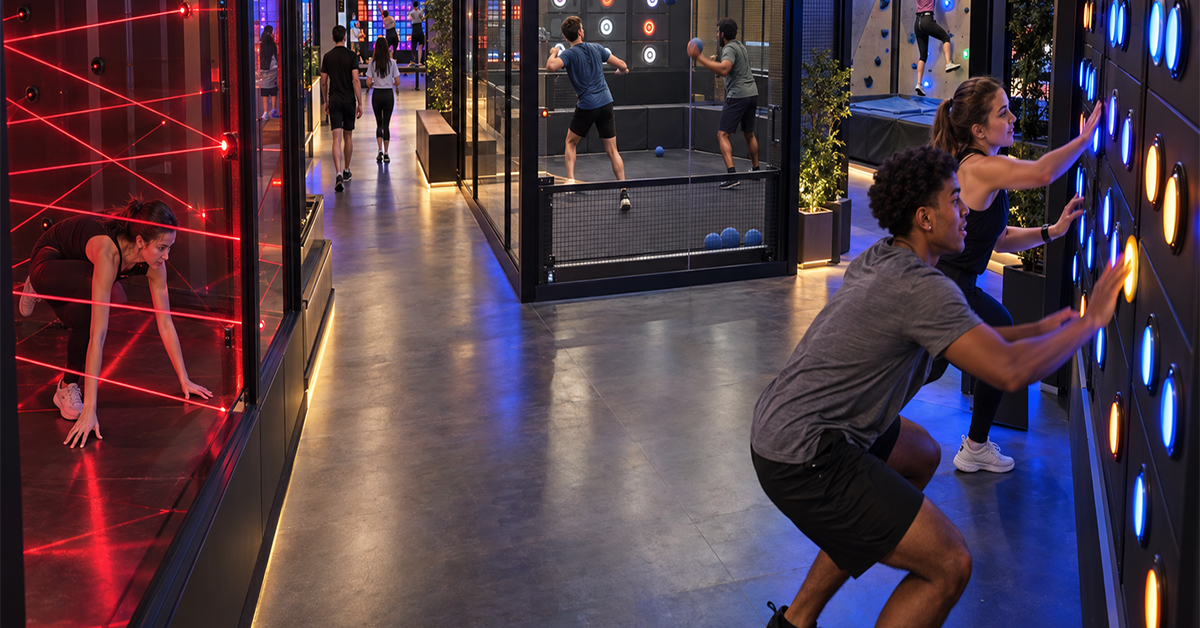
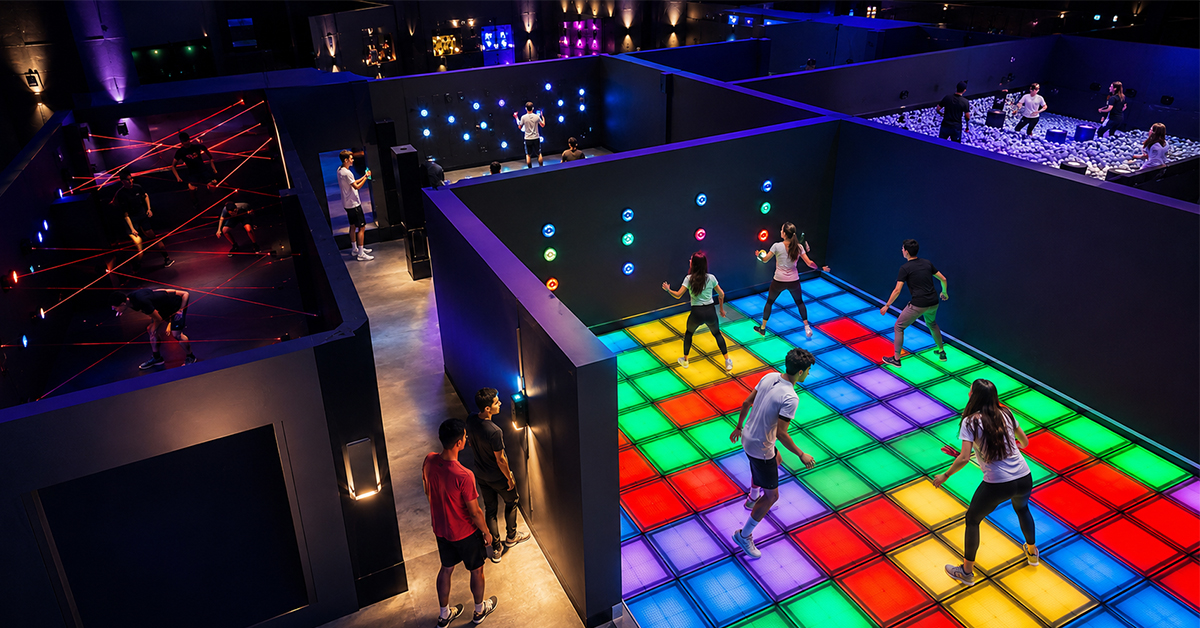
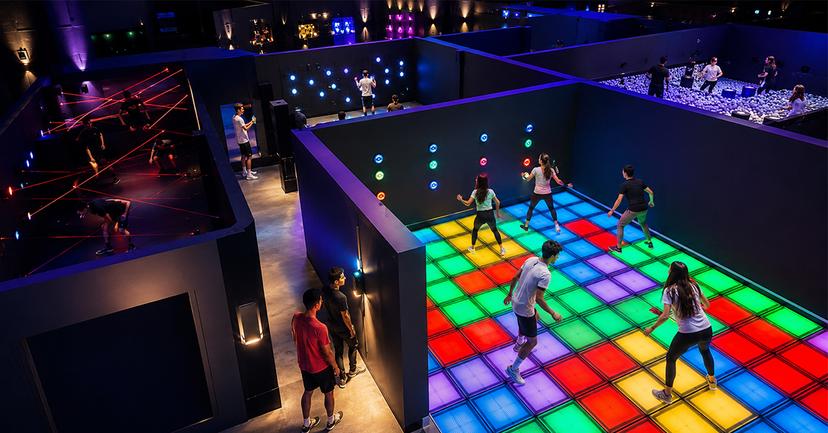
The Qatar project is a 14-room active entertainment venue created for physical, mental and social play. Its game lineup includes:
Grid
Mega Grid
Pixel Grid
Hoops
Control
Genius
Laser
Climb
Push
Octopus
Strike
Arena
Flash
Hide
The list matters, but the variety behind the names matters more.
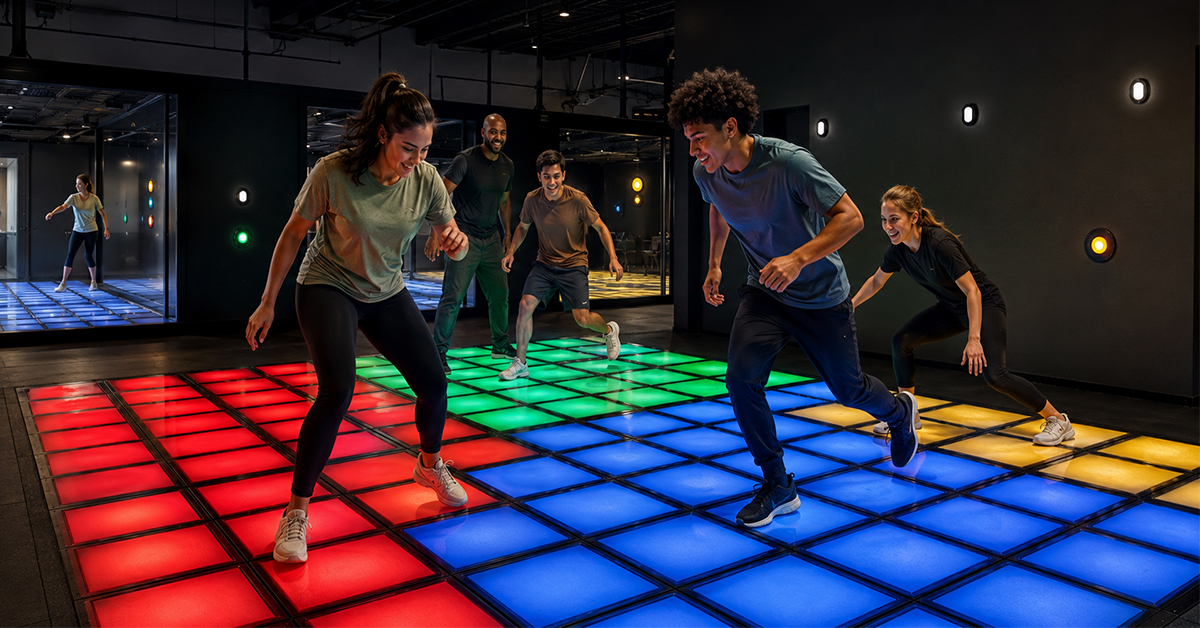
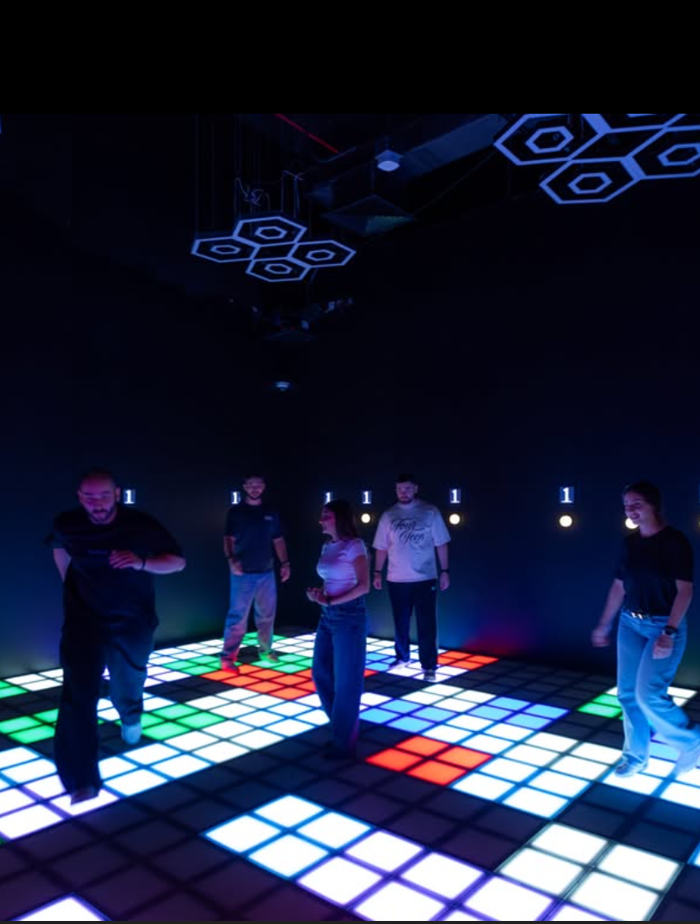
Some rooms ask players to move quickly across illuminated floor tiles. Some test aim, timing or balance. Others depend on memory, communication and the ability to make a decision while the clock is running. A group can leave one room laughing after a fast physical challenge and enter the next room knowing that a completely different teammate may have the advantage.
That change of rhythm is one of the strongest parts of the project.
Why Active Gaming Made Sense for an Escape Room Operator
Escape rooms and active gaming are not opposites. In fact, they share much of the same appeal.
Both take players away from passive entertainment. Both turn an ordinary group of visitors into a team. Both create stories people want to talk about after they leave.
The difference is replayability.
A traditional escape room normally leads toward one final answer. Active game rooms are built around performance. Players can finish a challenge and still want to try again because they were too slow, missed a target or saw another team achieve a better score.
For an experienced escape room operator, this changes the relationship with the customer. The first visit is no longer necessarily the end of the experience. It can be the beginning of a score to beat.
Active gaming also broadens the audience. A puzzle enthusiast may prefer Genius or Control. Someone who enjoys fast movement may head directly toward Grid, Flash or Push. Hoops and Arena bring familiar sports actions into a digital environment, while Laser, Hide and Climb add tension, timing and physical control.
The venue does not ask every person to be good at the same thing. That is important when the customers are families, birthday groups or work colleagues with very different personalities and abilities.
Why 14 Rooms Work Better as One Experience
It would be easy to market each room as a separate product. From an operator's point of view, however, the greater value comes from how the rooms work together.
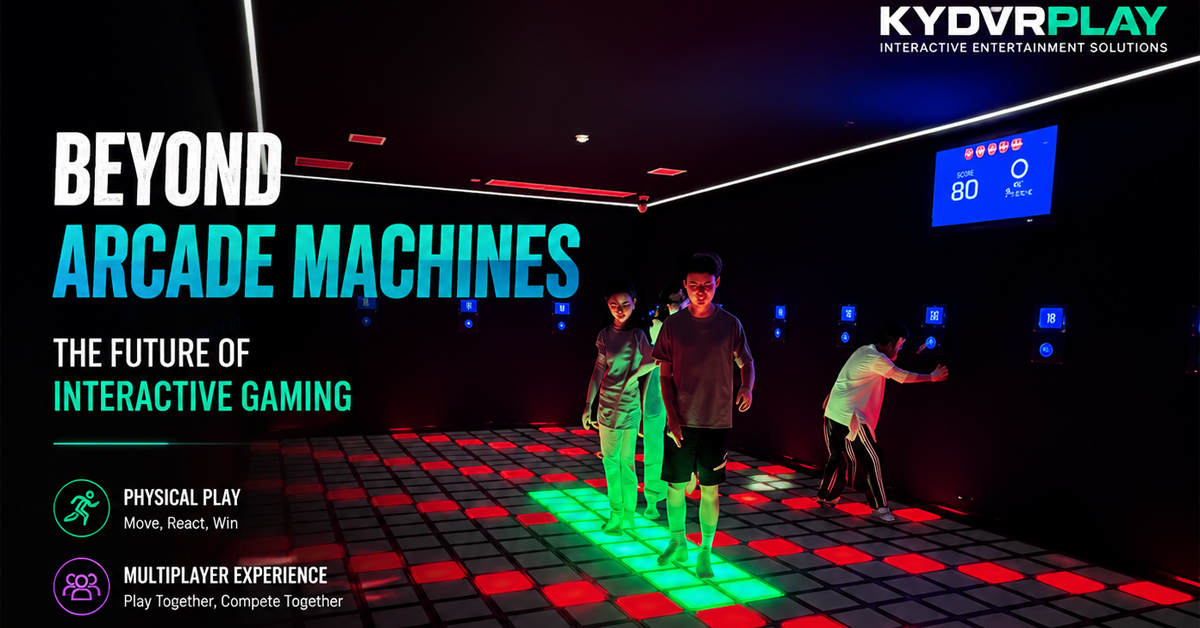
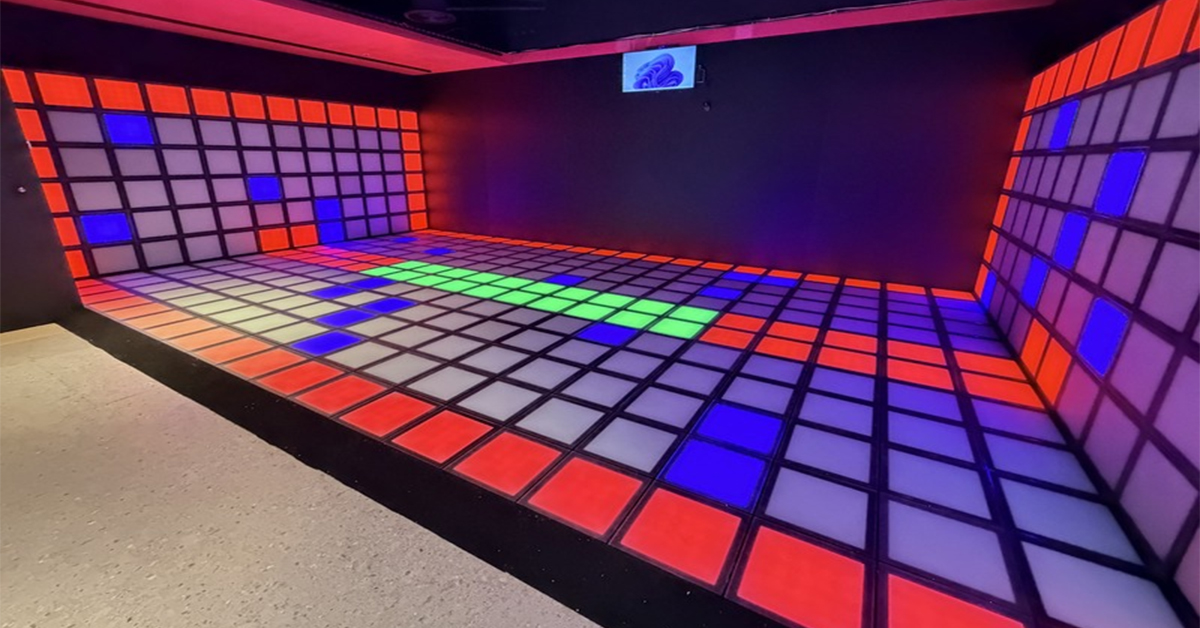
Grid, Mega Grid and Pixel Grid create a strong visual introduction through interactive floor technology. Push, Flash, Octopus and Strike keep the pace high with reaction-based play. Genius and Control slow the body down just enough to challenge the mind. Hoops and Arena add accessible competition, while Laser, Climb and Hide deliver the kind of memorable physical moments that groups often talk about later.
The room mix creates three practical advantages.
First, guests do not feel that they are repeating the same game with different lights. Each room asks for a different response.
Second, groups naturally discover different strengths. The fastest player may lead one mission, while the most observant or calmest player becomes essential in the next.
Third, the number of possible experiences gives the operator more ways to build return visits, group packages, competitions and special events.
This is where a multi-room active gaming center begins to feel less like an equipment showroom and more like an entertainment ecosystem.
The Year of Research Was About More Than Hardware
When investors compare active gaming suppliers, the most visible differences are usually the equipment and price. Those are important, but they do not answer every operational question.
The Qatar team needed to consider the complete customer journey. Would the rooms suit different ages and group types? Could the games create a natural balance between physical and mental challenges? Would the technology feel responsive? Could the venue develop its own identity instead of looking like a copy of another entertainment brand?
After more than a year of evaluation, the operator chose Kydavrplay for the multi-room project.
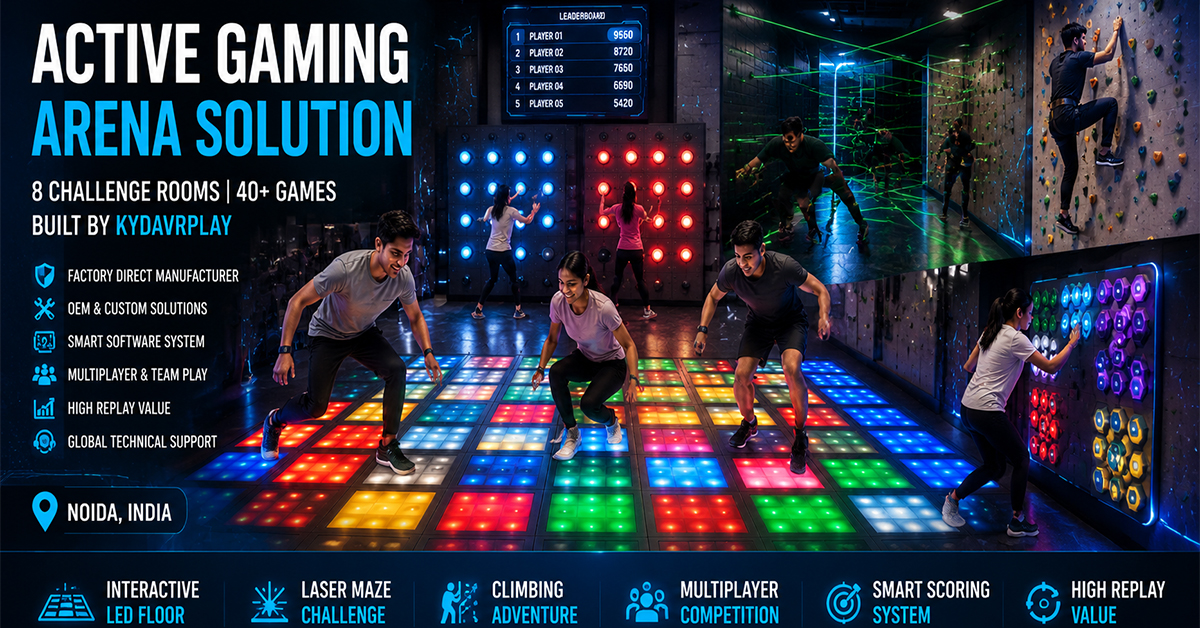
Kydavrplay combines interactive hardware with in-house game software and offers a broad portfolio of active challenge rooms. This made it possible to plan a varied lineup instead of building the venue around only one flagship attraction.
The cooperation also gave the operator room to create an independent local concept. For entrepreneurs who already understand their market, that flexibility can be as valuable as the games themselves.
Built for More Than Weekend Walk-In Traffic
A healthy entertainment venue needs more than one type of customer.
This Qatar project can serve casual visitors, but the 14-room format also creates opportunities for organized groups. Birthday parties can rotate through several challenges. Corporate teams can compare scores and discover how they communicate under pressure. Families can choose a mix of physical and thinking games rather than spending the entire visit on one activity.
The same variety supports content creation. A video of players racing across a Pixel Grid looks different from a clip inside a Laser room or a team competing in Hoops. For a new venue, that gives the marketing team more stories to tell without repeatedly filming the same attraction.
Most importantly, score-based games give visitors a simple reason to return: do better next time.
That promise is easy to understand. It does not require a long explanation or a new storyline. A player sees a score, remembers the mistake and immediately believes another attempt could be better.
What Other Entertainment Operators Can Learn from This Project
The clearest lesson is that moving into active gaming does not require an operator to forget everything learned from escape rooms.
The knowledge still matters: how groups behave, how anticipation is created, how staff introduce a mission and how a physical environment makes a game feel real. Active gaming builds on those strengths while introducing faster play, measurable performance and a stronger reason to return.
There is also a lesson in the operator's decision process. The team did not rush into the first attractive concept. More than one year was spent studying the market and comparing solutions. That patience helped the operator choose a room portfolio that could serve multiple audiences instead of depending on a single trend.
For investors planning a similar venue, the starting question should not be, “Which game looks the most impressive?”
A better question is, “What combination of experiences will make a group want to keep playing?”
The answer will depend on the location, target customers and operating model. A family entertainment center may need a different balance from a team-building venue. An escape room operator may want to retain more strategy and suspense. A shopping mall attraction may prioritize quick understanding and strong visual impact.
There is no universal room list. There should be a reason behind every selection.
A New Chapter for Active Entertainment in Qatar
The opening of this 14-room venue marks an important step for its operator. What began as a search for an escape room complement developed into a full active entertainment concept combining real movement, interactive technology and social competition.
Guests can cross illuminated grids, react to flashing targets, navigate laser challenges, climb, shoot, think and work together. The experience changes from room to room, but the underlying idea remains consistent: the player is not watching the action. The player is the action.
For Kydavrplay, the project is another example of how active gaming can be adapted to a local market without forcing every venue into the same format. For the operator, it is the result of careful research and a willingness to move beyond a familiar business model.
And for visitors in Qatar, it is a new place to discover who is fastest, who stays calm under pressure and who will ask for one more round.
Planning Your Own Active Gaming Project?
Kydavrplay provides customizable active game rooms and multi-room solutions for escape room operators, family entertainment centers, shopping malls, indoor amusement venues and entertainment investors.
For an initial project recommendation, send the Kydavrplay team your country, floor plan, target audience, preferred number of rooms and planned opening date.