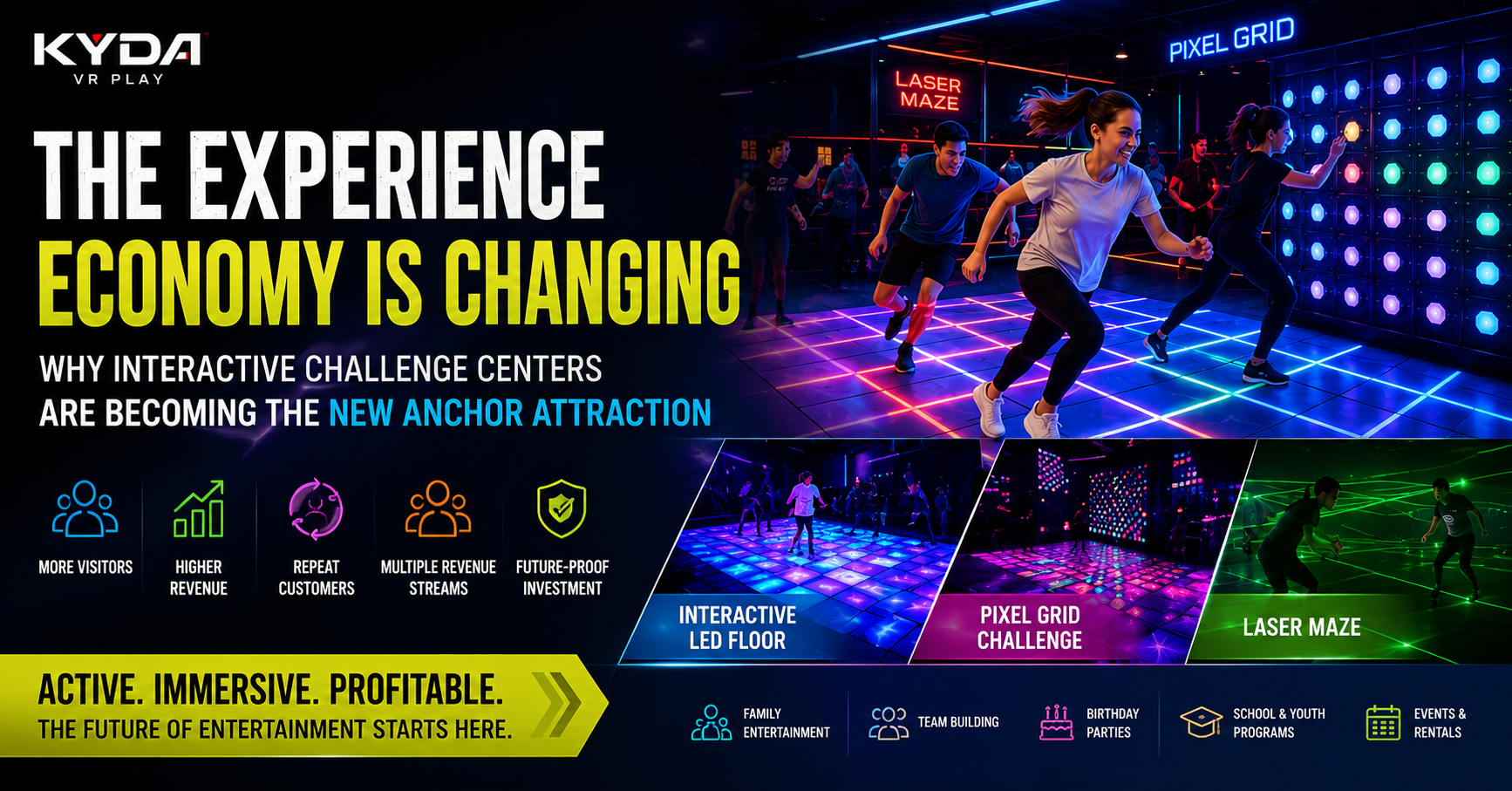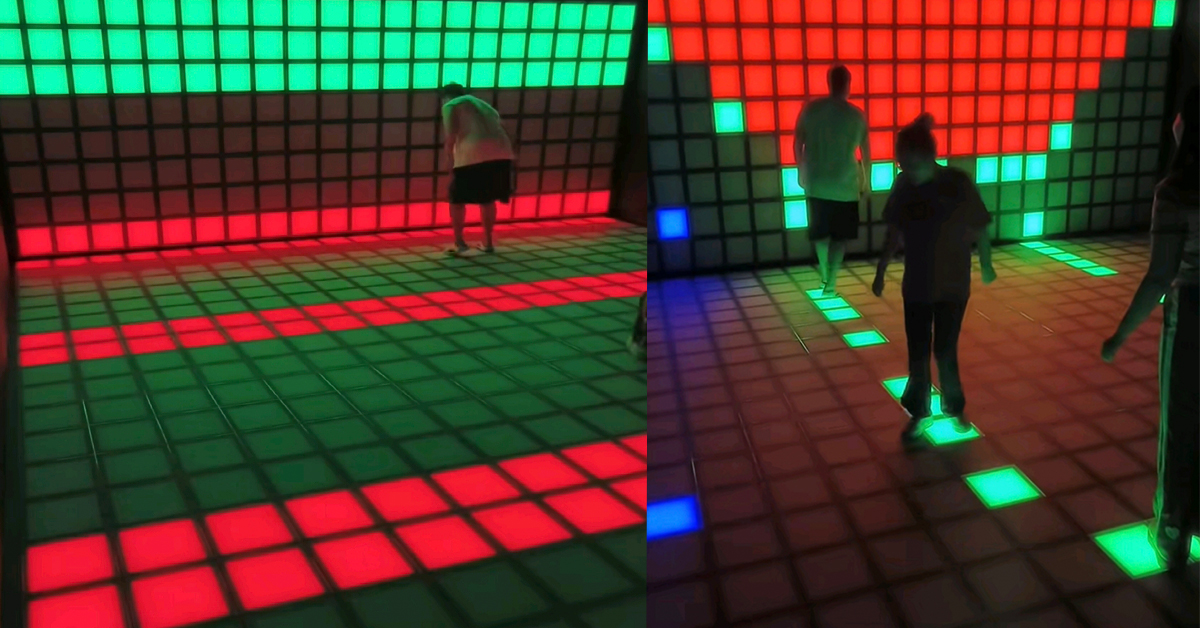

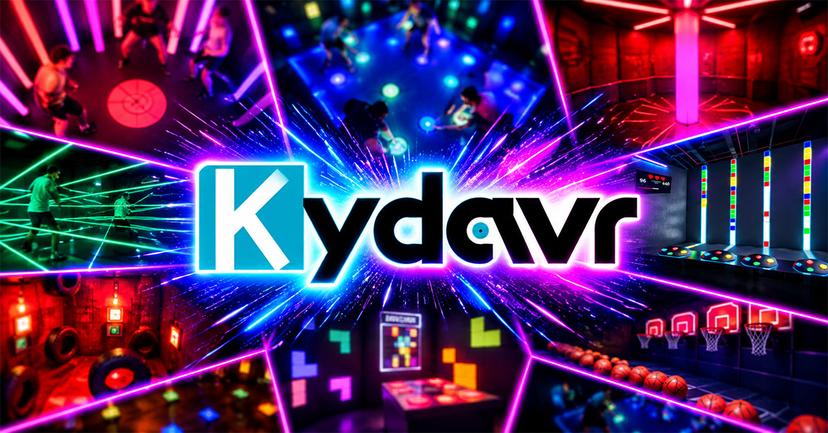
The Next Generation of Indoor Entertainment Is About Playing Together
What makes an entertainment venue memorable?
Is it the technology? The visual effects? The difficulty of the challenges?
Or is it the moment when four friends enter a room, discover they need to work together, and suddenly find themselves laughing, competing, and cheering for each other?
For a new immersive entertainment project in Portugal, the answer lies in combining these elements into one connected experience.
On October 10, 2026, a new competitive social gaming venue opened in Portugal, introducing nine interactive challenges that bring physical activity, digital feedback, mental problem-solving, and group competition together.
The project represents an international application of Kydavrplay's interactive entertainment solutions.
Rather than focusing exclusively on individual attractions, the venue is built around a simple concept: make people active participants in the game, not passive spectators.
Players move, react, think, communicate, and compete as they progress through different challenges.
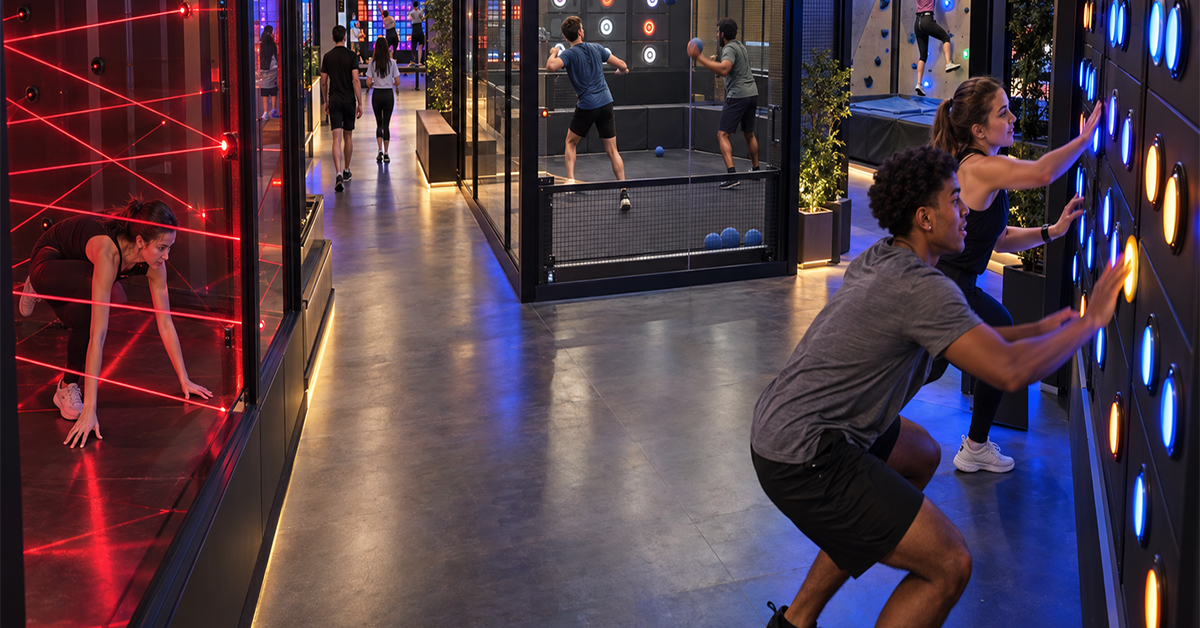
The result is an entertainment experience that combines elements of escape rooms, interactive sports, physical games, and digital competition.
For family entertainment center developers and indoor leisure operators, this project offers a useful example of how a physical-digital gaming concept can be organized for commercial use.
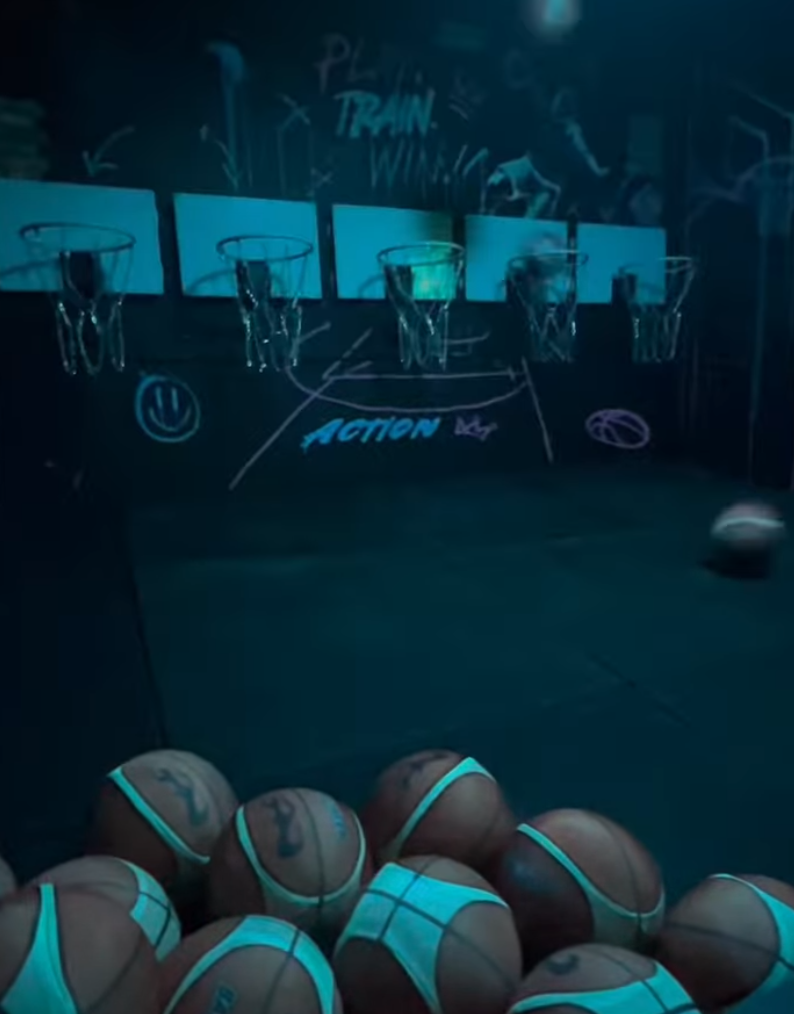
Project Snapshot: A New Social Gaming Destination in Europe
Project Location
Portugal, Europe
Opening Date
October 10, 2026
Entertainment Format
Competitive Social Gaming
Interactive Rooms
9 Challenges
Session Duration
60 Minutes
Team Format
2–4 Players
Concurrent Participation
Up to 20 Players
Solution Partner
Kydavrplay
The venue uses a team-based participation format, with multiple groups completing interactive challenges during a scheduled gaming session.
The experience is designed around a combination of movement, observation, speed, and strategic thinking.
Its nine rooms introduce different gameplay mechanics, while a shared scoreboard brings the competitive results together.
For an operator, this creates an organized experience with a clear beginning, a sequence of activities, and a measurable conclusion.
More importantly, it gives players a reason to interact with each other throughout their visit.
Why Competitive Social Gaming Is Different From Traditional Indoor Attractions
Competitive social gaming describes entertainment experiences in which people participate together in structured games involving physical actions, digital interaction, or both.
Unlike conventional arcade gaming, where customers may spend most of their time operating separate machines, social gaming emphasizes shared participation.
Unlike traditional escape rooms, where progress is often determined by solving a sequence of puzzles, active social gaming can incorporate reaction speed, accuracy, balance, coordination, and physical movement.
This distinction matters.
An interactive entertainment venue can attract visitors for reasons beyond completing a storyline or trying a single attraction.
Some visitors want competition. Others enjoy cooperative challenges. Some prefer physical activities, while others are more comfortable with observation and problem-solving.
A diversified game environment gives different participants opportunities to contribute.
The Portugal project illustrates this approach by combining nine challenges with different physical and cognitive requirements.
Instead of expecting every visitor to excel at the same activity, the venue offers a changing sequence of experiences.
This variety is an important design consideration for operators developing entertainment concepts for mixed groups.
The Experience Design: One Visit, Multiple Ways to Play
The central idea behind the Portugal venue is not simply to provide nine rooms.
It is to turn those rooms into one coordinated social experience.
A group begins by forming a team. Participants then progress through interactive challenges, completing tasks and earning points.
Each activity introduces a different way to succeed.
Some challenges reward fast reactions. Others require careful movement, accurate targeting, or logical thinking.
The changing mechanics help create a varied experience.
Consider how this works from a player's perspective.
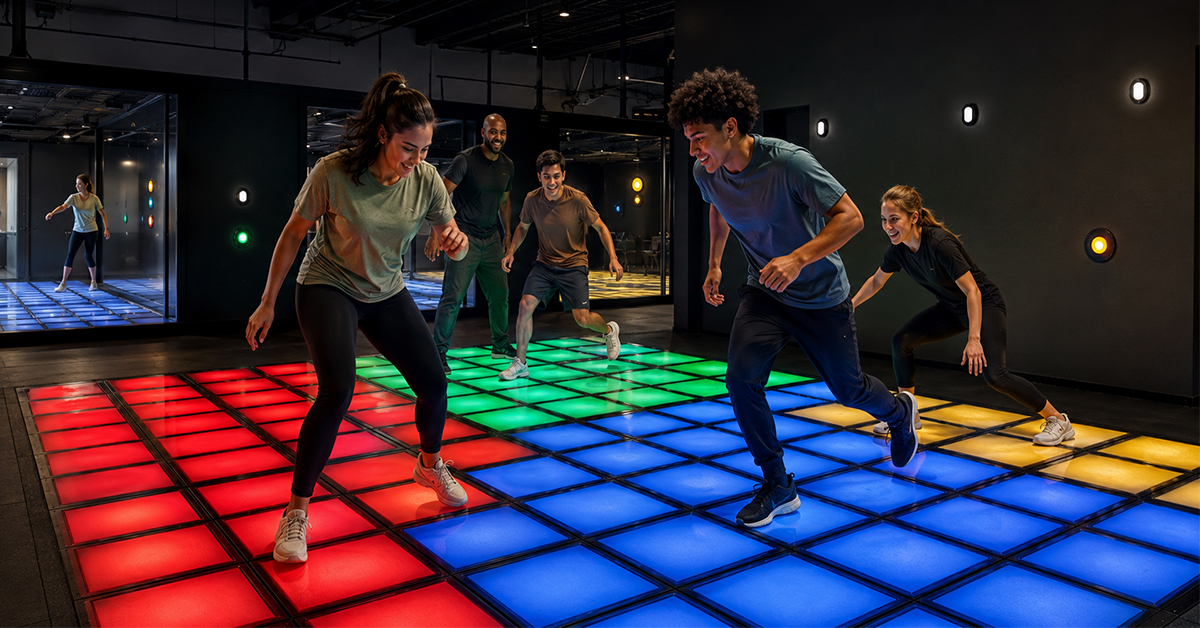
In one room, success may depend on recognizing an illuminated target and reacting quickly.
In another, players must navigate a physical obstacle while maintaining concentration.
A later challenge may require the group to solve a spatial puzzle before time runs out.
The transition between these activities keeps the experience from relying on a single skill.
This is particularly relevant to social entertainment because groups rarely contain participants with identical abilities.
A well-balanced room selection allows different players to demonstrate their strengths at different moments.
For operators, this highlights an important principle:
The value of a multi-room entertainment concept comes from the relationship between the experiences, not simply the number of attractions installed.
Six Types of Player Engagement in One Gaming Concept
Instead of evaluating the project room by room, it is useful to examine the six types of engagement it combines.
|
Engagement Category |
Player Experience |
Commercial Design Value |
|
Reaction |
Responding quickly to changing visual signals |
Simple rules and measurable performance |
|
Agility |
Moving through physical obstacles |
Active participation and movement |
|
Accuracy |
Hitting or reaching designated targets |
Clear objectives and competitive scoring |
|
Logic |
Solving puzzles and recognizing patterns |
Broadens the range of skills involved |
|
Coordination |
Controlling movement and balance |
Adds physical variety |
|
Team Competition |
Comparing results across challenges |
Connects individual games into one experience |
These categories can guide equipment selection for other indoor entertainment projects.
For example, an operator who chooses only reaction-based games may create an experience that becomes repetitive.
A venue that combines reaction challenges with balance, puzzles, and accuracy games may offer a broader range of activities.
The Portugal project demonstrates how different mechanics can coexist within a single entertainment format.
Why the 60-Minute Session Model Deserves Attention
One of the most interesting operational features of the Portugal project is its defined gaming session.
Participants book a 60-minute experience rather than purchasing unlimited access to individual machines.
This creates a different relationship between the customer and the attraction.
The customer is buying a complete experience with an expected duration, not simply access to a room or piece of equipment.
From an operating perspective, a scheduled session model can support several functions.
First, it helps establish customer expectations.
Visitors know approximately how much time to reserve for the activity.
Second, it allows operators to plan group arrivals and staff responsibilities around scheduled sessions.
Third, it provides a defined structure for pricing and reservations.
Fourth, it creates opportunities to offer packages for organized groups.
However, a scheduled format also requires careful planning.
Operators must consider how long each challenge takes, whether groups can move between rooms without delays, and how late arrivals affect subsequent sessions.
The number of game rooms alone does not determine hourly customer capacity.
Actual throughput depends on room occupancy, transition time, staff procedures, maintenance, and the overall operating schedule.
For investors considering similar projects, these details should be addressed during venue planning rather than after installation.
The Commercial Importance of Team-Based Entertainment
The Portugal venue supports teams of two to four participants, with up to five teams playing simultaneously.
This creates opportunities for different group sizes without requiring every visitor to participate individually.
A couple can play together.
Four friends can form a team.
A larger group can divide into several teams and compete through the same scoring framework.
This flexibility is particularly relevant for social entertainment businesses.
Customers are often looking for activities they can experience together.
Birthday parties, company gatherings, friendship groups, and school outings all involve shared participation.
The entertainment value is therefore not limited to what happens inside each room.
It also includes conversations between challenges, reactions to unexpected results, and the anticipation of the final scoreboard.
For operators, this can support group-focused marketing and event packages.
It does not guarantee repeat bookings or higher revenue, but it provides a format that can be marketed to several customer segments.
A Scoreboard Can Turn Gameplay Into a Shared Story
A scoreboard may appear to be a small feature compared with illuminated walls, sensors, or physical obstacles.
In a competitive gaming environment, however, scoring plays a significant role in how participants interpret the experience.
Without a shared result, nine challenges may feel like nine separate activities.
With a connected scoring format, players can understand their performance as part of a larger competition.
Every completed challenge contributes to the final outcome.
A team that performs poorly in one activity may still improve its standing through another.
This creates anticipation and encourages participants to pay attention to the overall competition.
For operators designing multi-room experiences, scoring should be considered during the earliest stages of planning.
Questions include how different games award points, how results are associated with teams, and how the final ranking is presented.
A clear scoring structure helps make the experience understandable.
It also gives operators a foundation for organizing competitions and group events.
Designing Entertainment for Different Languages and Audiences
An important feature of the Portugal venue is the availability of game interfaces in multiple languages.
The published customer experience supports Portuguese, English, Spanish, German, French, and Italian within the games.
This is a useful example of how localization can influence the accessibility of interactive entertainment.
A game that depends on instructions must communicate its objectives clearly.
If players cannot understand the rules, even visually impressive equipment may create confusion.
For international entertainment projects, language planning should therefore extend beyond reception signage and marketing materials.
Operators should evaluate game instructions, user interfaces, safety information, staff communication, and booking processes.
Not every market requires the same language combination.
However, multilingual functionality can be particularly relevant for entertainment venues serving tourists, international residents, and mixed-language groups.
This is one of the practical considerations investors should discuss with an equipment supplier when planning a project in Europe or another multilingual market.
What Escape Room Operators Can Learn From This Project
Traditional escape rooms and competitive social gaming share several characteristics.
Both can involve group bookings, timed sessions, team communication, and challenge-based entertainment.
However, their core gameplay structures are different.
Escape rooms typically emphasize storytelling, clues, puzzles, and progression toward a final objective.
Active gaming introduces a wider range of physical and digitally responsive tasks.
This makes the Portugal project relevant to operators considering diversification.
An existing escape room business may already have experience with reservations, customer briefings, group management, and scheduled sessions.
These operational capabilities can be useful when evaluating an additional interactive gaming attraction.
However, introducing active gaming also creates new requirements.
Physical movement changes the importance of flooring, obstacle placement, equipment durability, ventilation, safety procedures, and maintenance.
Operators must also evaluate whether their existing venue layout can accommodate the new experience.
Rather than treating active gaming as an automatic replacement for escape rooms, it may be more useful to view it as a complementary entertainment category.
The appropriate business model depends on local demand and the operator's existing customer base.
From Game Equipment to Experience Architecture
A commercial immersive gaming project should begin with the intended customer experience.
Equipment selection comes next.
This distinction is important because interactive games are only one part of a functioning entertainment venue.
A complete project requires coordination between physical space, gameplay mechanics, visitor movement, software, and daily operations.
For example, a reaction game may require specific wall dimensions and player clearance.
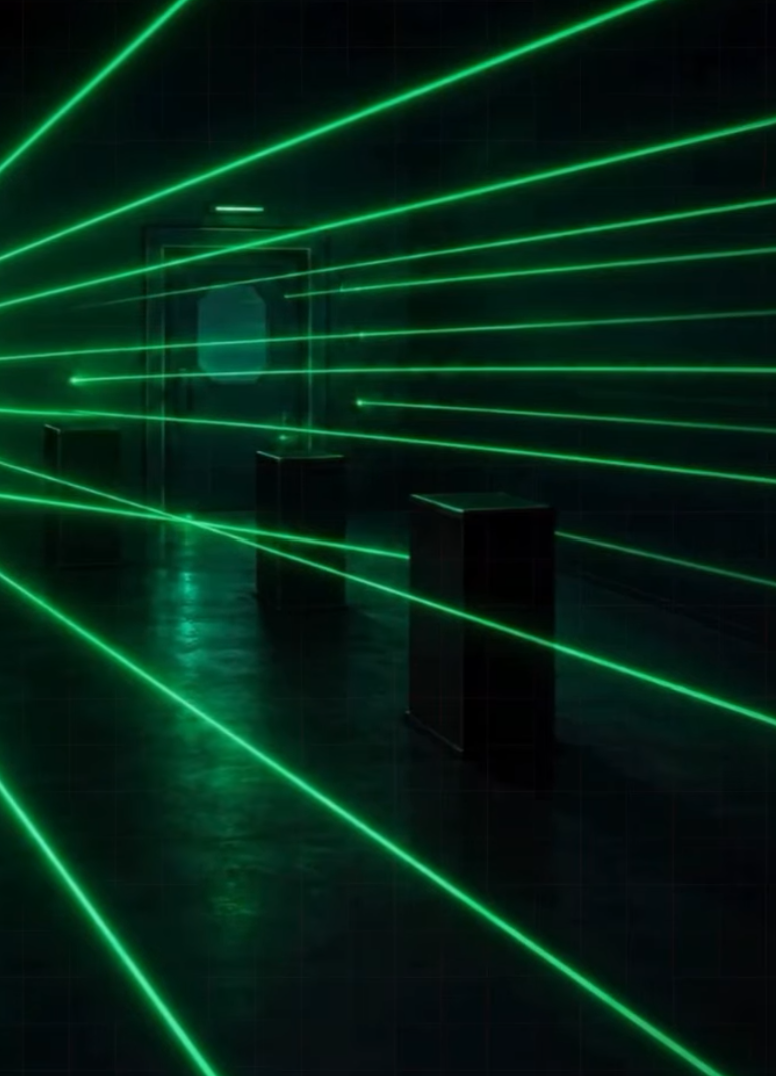
A laser challenge may require controlled lighting and a defined obstacle area.
A balance challenge may need additional consideration of flooring, fall risks, and supervision.
A logic game may have different spatial and operational requirements.
Combining these attractions requires more than placing equipment in available rooms.
The overall design must account for transitions, access, safety, and the intended flow of participants.
This is where project planning becomes essential.
Kydavrplay works with entertainment developers to evaluate game combinations and interactive entertainment configurations according to project requirements.
Its broader product portfolio includes physical challenge games, interactive gaming floors, reaction systems, laser attractions, puzzle-based games, and other technology-driven entertainment equipment.
For investors, the key purchasing question should not be limited to:
"How much does one interactive game room cost?"
A more useful question is:
"How can different interactive games be combined into a commercially practical entertainment experience for my available space and target audience?"
Five Planning Questions Before Investing in a Social Gaming Venue
The Portugal case highlights several questions that should be answered before developing a similar project.
Who will be the primary customers?
A venue targeting corporate groups may require different game configurations and booking arrangements from one targeting families or teenagers.
Understanding the intended audience helps guide room selection and session design.
What is the ideal game duration?
A longer session may allow more activities, but it can also affect booking schedules and customer throughput.
Operators should evaluate the experience duration alongside expected demand and available room capacity.
How should different abilities be balanced?
A diversified game lineup can make participation more accessible to mixed groups.
The challenge is to combine physical and mental activities without making the overall experience too difficult or repetitive.
How will customers move through the venue?
Circulation routes, waiting areas, room transitions, and staff supervision influence the customer experience.
These elements should be incorporated into the floor plan.
What happens after the first visit?
Operators should consider how competitions, group events, new challenges, and marketing activities could encourage future visits.
Repeat-play strategies should be supported by actual customer behavior and operational data rather than assumed during the investment stage.
Why This Project Is Relevant to European Entertainment Developers
Europe contains a diverse indoor leisure market, with entertainment businesses ranging from small independent attractions to large multi-activity centers.
The Portugal project illustrates one possible format for operators seeking to introduce physical-digital entertainment into this market.
Its key characteristics include a defined session, multiple game categories, team-based participation, and competitive scoring.
These features may be relevant to developers planning attractions in shopping centers, entertainment districts, mixed-use leisure facilities, or existing indoor activity venues.
Nevertheless, commercial feasibility varies by location.
Rental costs, customer demographics, staffing, electricity requirements, building regulations, and local competition can materially influence the business model.
A successful equipment selection process therefore requires both entertainment design and commercial evaluation.
Investors should avoid assuming that a concept performing well in one country will automatically produce the same results elsewhere.
Instead, real international projects should be used as references for planning, comparison, and technical discussion.
How Kydavrplay Supports Custom Interactive Entertainment Projects
Kydavrplay provides interactive gaming equipment and project solutions for commercial indoor entertainment facilities.
Its available solutions cover multiple categories, including reaction games, laser challenges, interactive sports, puzzle activities, and physical gaming experiences.
With more than 60 game solutions in the wider KYDA portfolio, project developers can evaluate different room combinations according to their intended business model.
Kydavrplay can support project discussions involving:
Interactive game room selection and configuration.
Multi-room entertainment layout planning.
Interactive hardware and gameplay requirements.
Team-based scoring and control system options.
Custom branding and selected game modifications.
Installation coordination and technical support according to project scope.
The objective is to help operators develop an entertainment concept that connects game equipment with practical venue requirements.
Not every project requires the same number of rooms or the same software configuration.
A compact attraction may focus on several high-engagement activities, while a larger venue may combine a wider selection of physical and cognitive challenges.
The right solution should be based on the site conditions, investment plan, and customer experience objectives.
What This Portugal Opening Demonstrates
The new Portugal venue provides a useful example of how physical gaming and digital interaction can be brought together within one commercial entertainment project.
Its nine challenges are not simply independent activities.
They form a structured experience in which players participate as teams, complete different tasks, accumulate points, and compare their performance.
The project also demonstrates the importance of designing for social participation.
Technology creates the interactive environment, but the people inside that environment create much of the entertainment value.
Their reactions, decisions, teamwork, and competitive moments are central to the experience.
For operators evaluating immersive entertainment concepts, this is an important distinction.
The goal should not be to install the largest possible number of interactive devices.
It should be to create an experience that customers understand, enjoy, and want to share with others.
Conclusion: The Future of Indoor Gaming Is Physical, Digital, and Social
The opening of this nine-room entertainment venue in Portugal on October 10, 2026, adds another example of how competitive social gaming can be implemented in a commercial indoor setting.
It combines physical challenges, digital interaction, logic-based activities, and team competition into a structured 60-minute experience.
For Kydavrplay, the project provides a European reference for the application of interactive entertainment solutions.
For entertainment investors, it offers an opportunity to study the relationship between game variety, session design, player engagement, and venue operations.
As the indoor entertainment industry continues to develop, concepts that connect people through active participation are likely to remain an important area of experimentation and investment.
The Portugal project shows how that concept can take shape in a real venue.
Planning an Immersive Social Gaming Venue?
Are you developing a new indoor entertainment center, expanding an existing family entertainment business, or exploring an alternative to traditional escape room attractions?
Kydavrplay provides customizable interactive gaming equipment and multi-room entertainment solutions for international projects.
Tell us about your proposed location, available space, target customers, and preferred game categories.
Our team can help you evaluate suitable interactive entertainment configurations and equipment requirements.
Start Your Next Interactive Entertainment Project With Kydavrplay.