
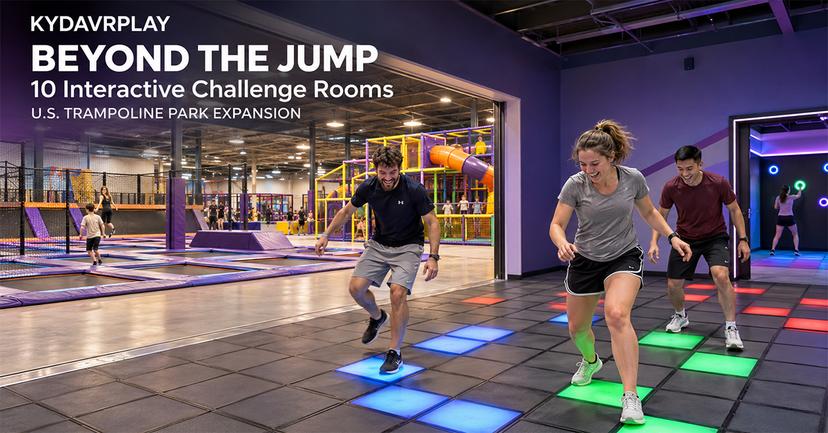
For an established trampoline park, expansion starts with a practical question: what else would guests enjoy doing during their visit?
Jumping is already part of the venue’s identity. The next attraction needs to bring something different to the experience while still fitting an active indoor environment.
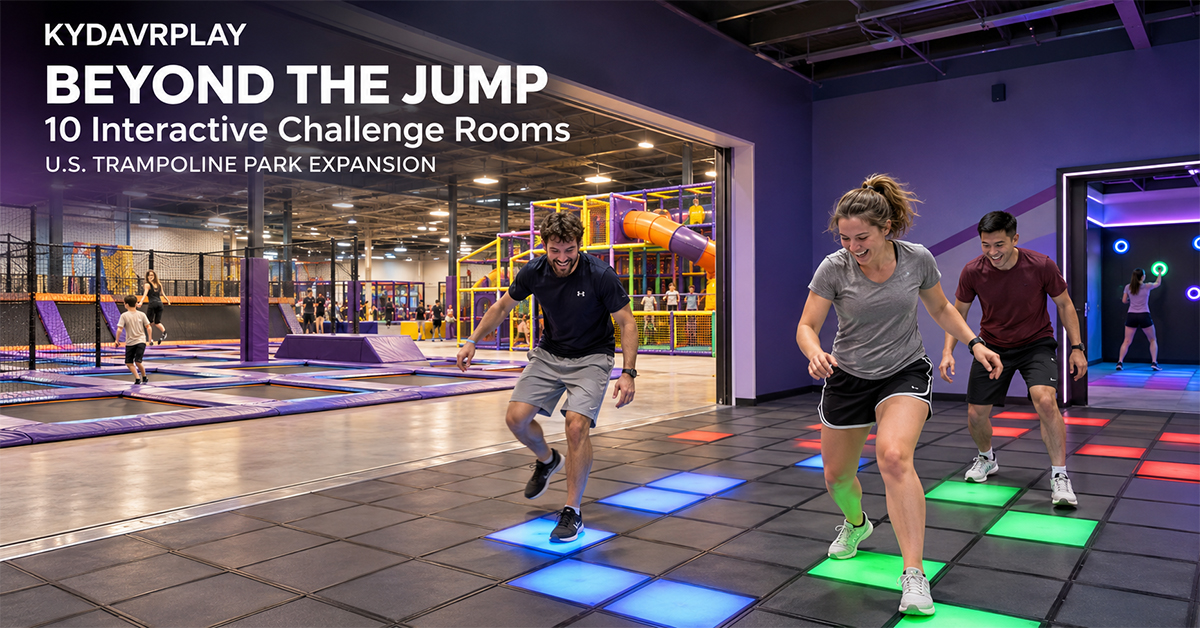
A new U.S. customer project from KYDAVRPLAY follows this approach. The operator, whose existing business is a trampoline park, selected 10 interactive challenge rooms to broaden its attraction offering.
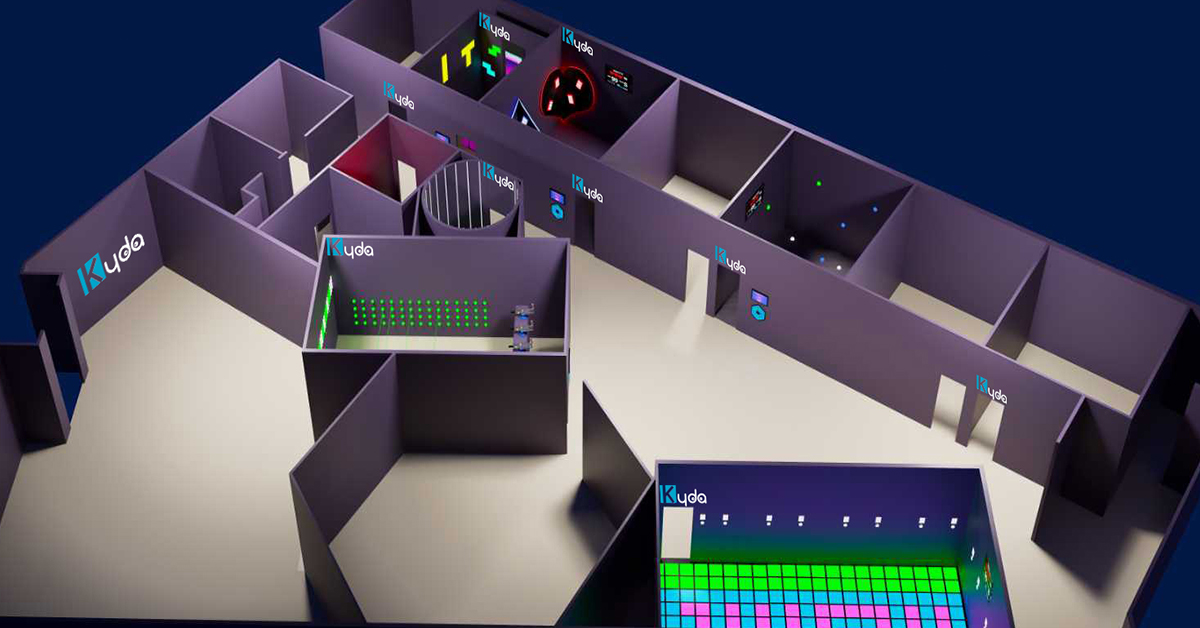
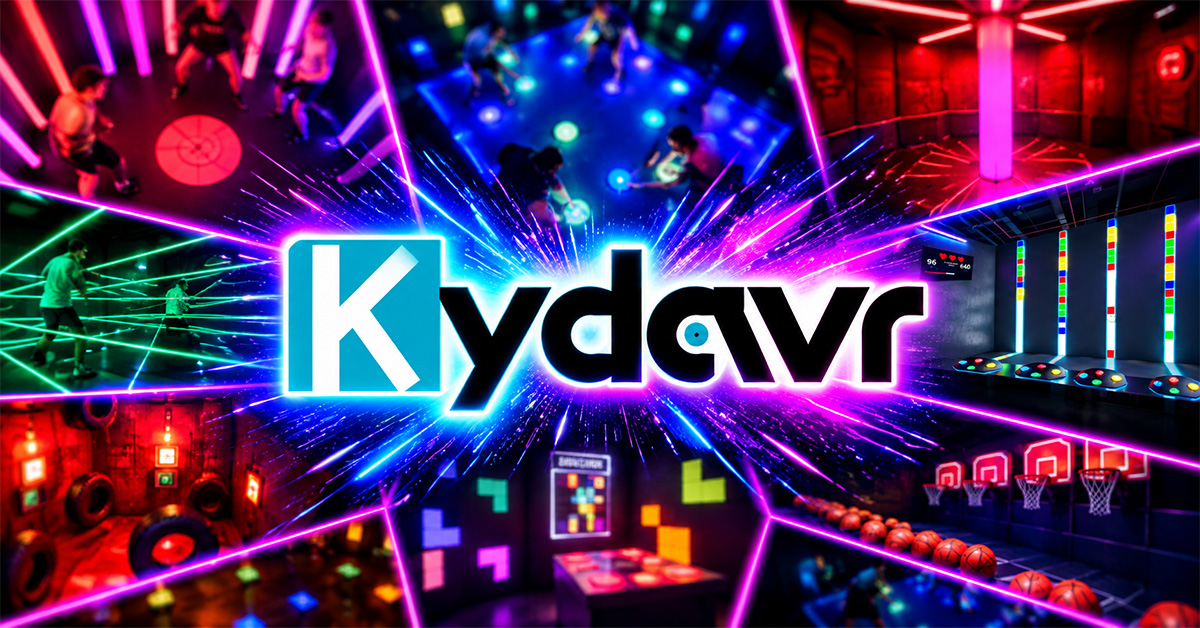
The room selection includes Pixel Grid, Grid, Laser, Hoops, Octopus, Hide, Climb, Push, Strike, and Control. The interactive gaming area is connected to the venue’s children’s soft-play area, bringing different forms of active entertainment together within the same destination.
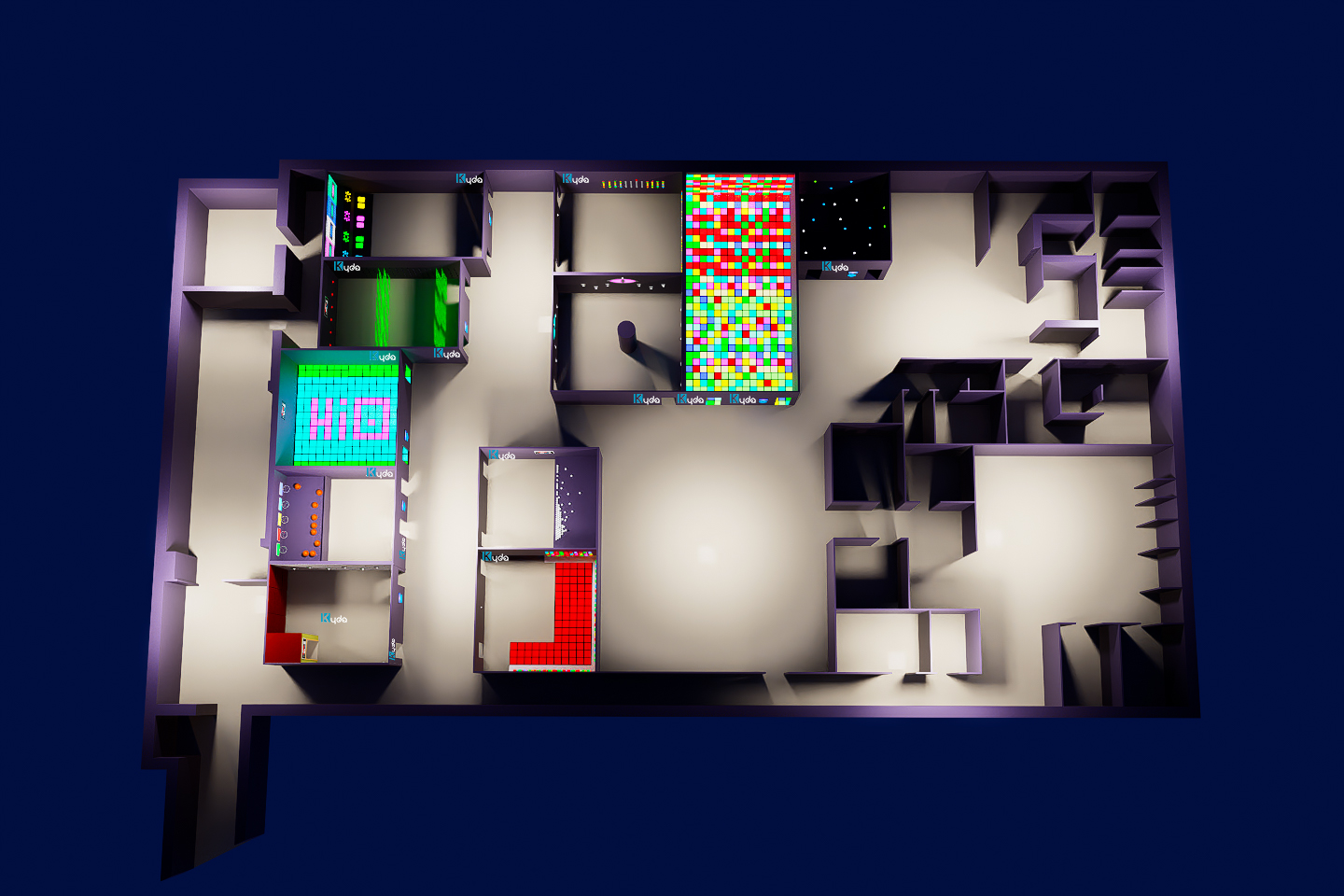
Project at a Glance
|
Item |
Project Details |
|
Country |
United States |
|
Existing business |
Trampoline park |
|
Expansion category |
Interactive active gaming |
|
Selected equipment |
10 interactive challenge rooms |
|
Room lineup |
Pixel Grid, Grid, Laser, Hoops, Octopus, Hide, Climb, Push, Strike, Control |
|
Venue relationship |
Interactive gaming connected to children’s soft play |
|
Supplier |
KYDAVRPLAY |
From a Trampoline Destination to a Broader Activity Mix
The starting point for this project was an existing active entertainment business.
Rather than building its entire offering around jumping, the operator is expanding into activities that ask guests to use different skills. Interactive rooms introduce challenges involving footwork, observation, aiming, reaction, body positioning, and coordinated decisions.
This gives the expansion a clear role within the venue.
A guest who enjoys navigating a laser challenge may have different interests from someone who prefers basketball or illuminated floor games. By adding several activity types, the operator creates more choices around the original trampoline experience.
The project illustrates a practical direction for trampoline park expansion: select attractions that complement the existing offer and give visitors additional ways to participate.
Why Interactive Rooms Complement a Trampoline Park
Trampolines and interactive challenge rooms both involve physical participation, but the activities feel different.
Trampoline play centers on jumping and movement. Interactive rooms introduce specific tasks: reach a target, follow a visual cue, choose a route, make an accurate throw, or respond at the right moment.
The experience becomes about how a player moves and how they interpret the challenge.
For an operator, that difference is useful. It allows new attractions to remain consistent with an active entertainment concept while broadening the experience beyond the original activity.
In this project, the 10 selected rooms provide several distinct forms of participation within the expansion.
Ten Rooms, Several Ways to Participate
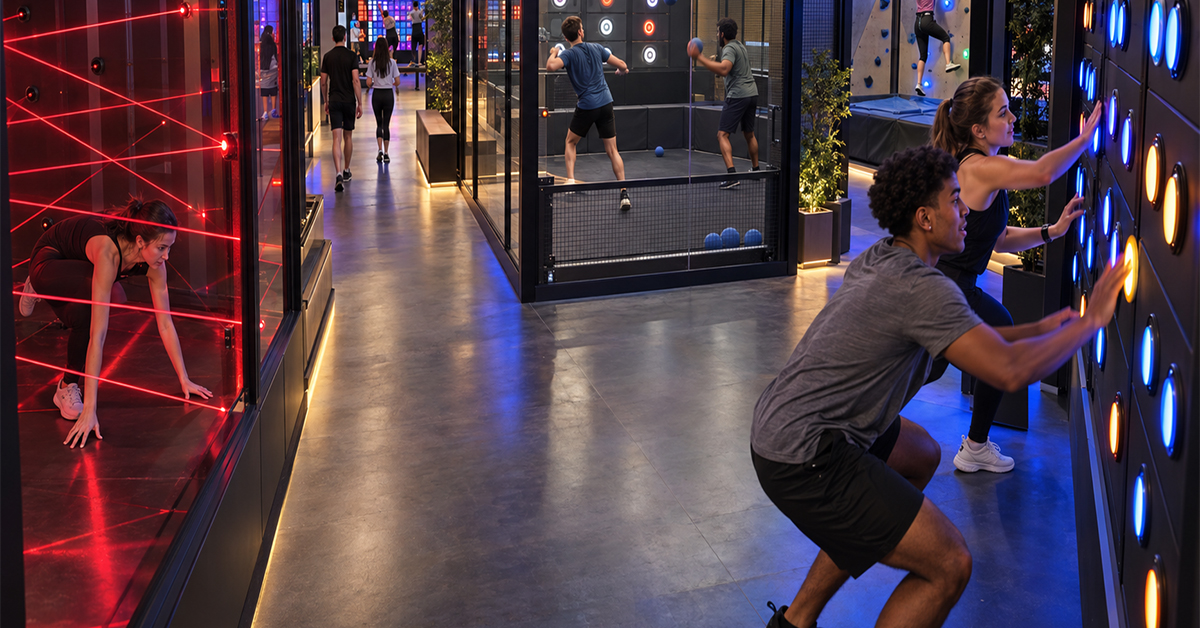
The room mix combines floor-based games, obstacle challenges, ball skills, climbing, and interactive controls.
The descriptions below outline the general focus of each room type; individual rules depend on the selected game configuration.
|
Activity Category |
Selected Rooms |
General Experience |
|
Interactive floor challenges |
Pixel Grid, Grid |
Follow changing floor cues using timing, footwork, and spatial awareness |
|
Obstacle navigation |
Laser |
Move through a laser challenge with controlled body positioning |
|
Ball and target skills |
Hoops, Strike |
Combine aiming, timing, and hand-eye coordination |
|
Interactive climbing |
Climb |
Use physical coordination and route planning |
|
Reaction and coordination |
Octopus, Push |
Recognize targets and respond through coordinated movement |
|
Observation and positioning |
Hide |
Adjust movement and position in response to game cues |
|
Interactive control challenges |
Control |
Interpret signals and coordinate responses |
The selection offers variety without requiring every room to serve the same purpose.
Some rooms emphasize fast reactions. Others place more attention on accuracy or controlled movement. That balance is relevant to a venue welcoming groups whose members have different interests and abilities.
Connecting Active Gaming with Children’s Soft Play
An important feature of this project is the connection between the interactive gaming area and the children’s soft-play attraction.
These areas offer different experiences within the same venue. Soft play provides a dedicated environment for children’s exploration and movement, while the interactive rooms introduce structured challenges for eligible participants.
For families visiting together, this arrangement creates a broader range of activity choices. Participation still depends on the age, height, ability, and safety requirements of each attraction.
The connection also highlights a planning consideration for similar projects: neighboring attractions should feel part of one destination while maintaining clear boundaries, suitable supervision, and understandable circulation.
Equipment selection is only one part of that process. The relationship between play areas matters just as much.
Giving Group Visits More Variety
A multi-attraction venue can offer groups several ways to shape their visit.
Friends may choose different challenge types. Families may combine suitable attractions during an outing. Birthday and organized group activities can be planned around a selection of rooms, subject to the venue’s operating arrangements and participation requirements.
The value of the room mix is the range of tasks available.
One participant may contribute through accurate shooting, another through quick recognition, and another through careful navigation. Different strengths can become useful as a group moves between activities.
For trampoline operators considering a similar expansion, this is a helpful way to assess equipment: look at the role each attraction plays in the overall group experience.
What This Expansion Shows Other Trampoline Park Operators
Start with the experience you want to add
A new attraction should have a clear purpose.
An operator may want more skill-based activities, more choices for accompanying family members, or a stronger offering for group visits. Defining that purpose helps guide the room selection.
This project brings several new challenge types into an existing trampoline environment.
Consider the whole activity mix
An interactive floor can create a strong visual feature, but the wider room combination determines how varied the experience becomes.
Here, Pixel Grid and Grid sit alongside laser, basketball, climbing, reaction, and throwing activities. Each category adds a different form of participation.
Plan the connection between attractions
When active gaming is added to an operating venue, entrances, waiting areas, circulation, noise, supervision, and access requirements need to be considered together.
A room list cannot answer all of those questions. Site planning should establish how the new area will work alongside trampolines, soft play, and shared facilities.
A Practical Example of Trampoline Park Diversification
This U.S. project demonstrates how an established trampoline park can expand its concept through interactive challenge rooms.
The confirmed selection includes 10 KYDAVRPLAY rooms, with interactive gaming connected to children’s soft play. Together, the attractions broaden the venue’s activity mix from jumping into a wider combination of movement, observation, reaction, and physical skills.
For other indoor entertainment operators, the project provides a concrete reference for planning an expansion around complementary experiences.
Discuss Your Trampoline Park Expansion with KYDAVRPLAY
Are you considering interactive challenge rooms for an existing trampoline park or family entertainment venue?
Share your current floor plan, available expansion area, clear height, target audience, and existing attraction mix with KYDAVRPLAY. These details provide a starting point for discussing suitable rooms and their relationship to the rest of your venue.