

A bowling centre may already attract groups every weekend. A trampoline park may have a strong family audience. An arcade may have excellent visibility inside a shopping mall.
Yet each operator can face the same question:
What should we add next?
The answer starts with understanding what guests would do with the new attraction. Would they book it before arriving? Try it between existing activities? Choose it for a birthday party? Bring colleagues back for a separate visit?
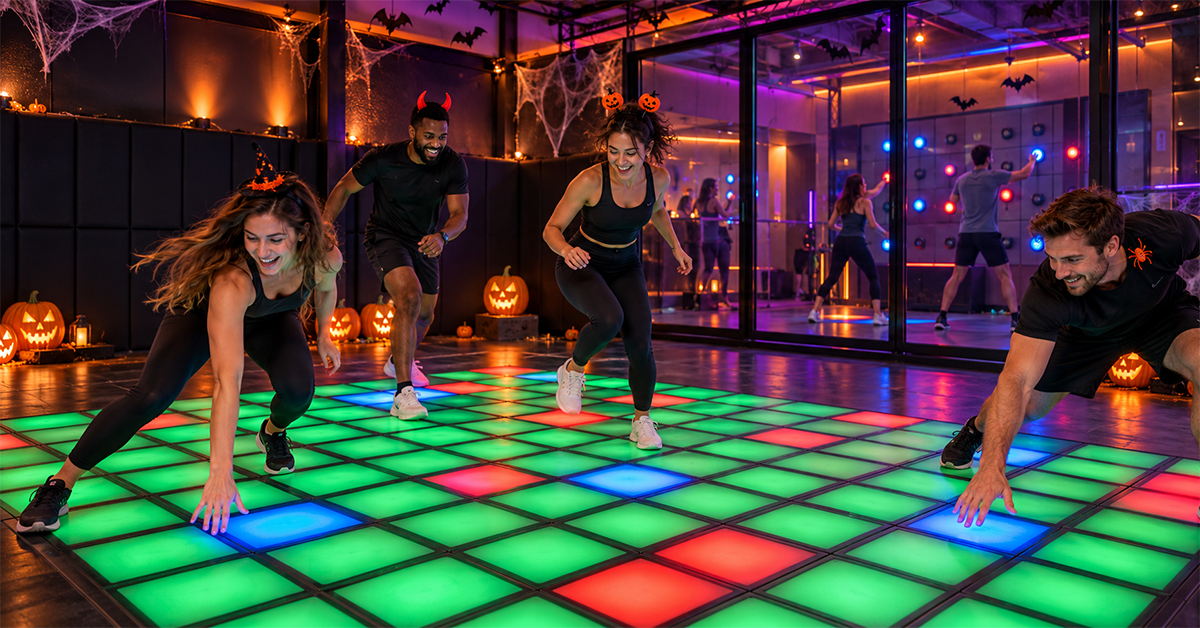
Active Gaming for Multi-Attraction Venues deserves consideration because it introduces a different kind of participation: guests move through physical challenges, respond to interactive signals and work towards a shared result.
But a successful expansion needs more than an exciting room. It needs a clear role within the whole venue.
What Is Active Gaming in a Multi-Attraction Venue?
Active gaming combines physical movement with interactive game technology. Players use actions such as stepping, reaching, aiming or pressing targets to complete challenges and receive feedback.
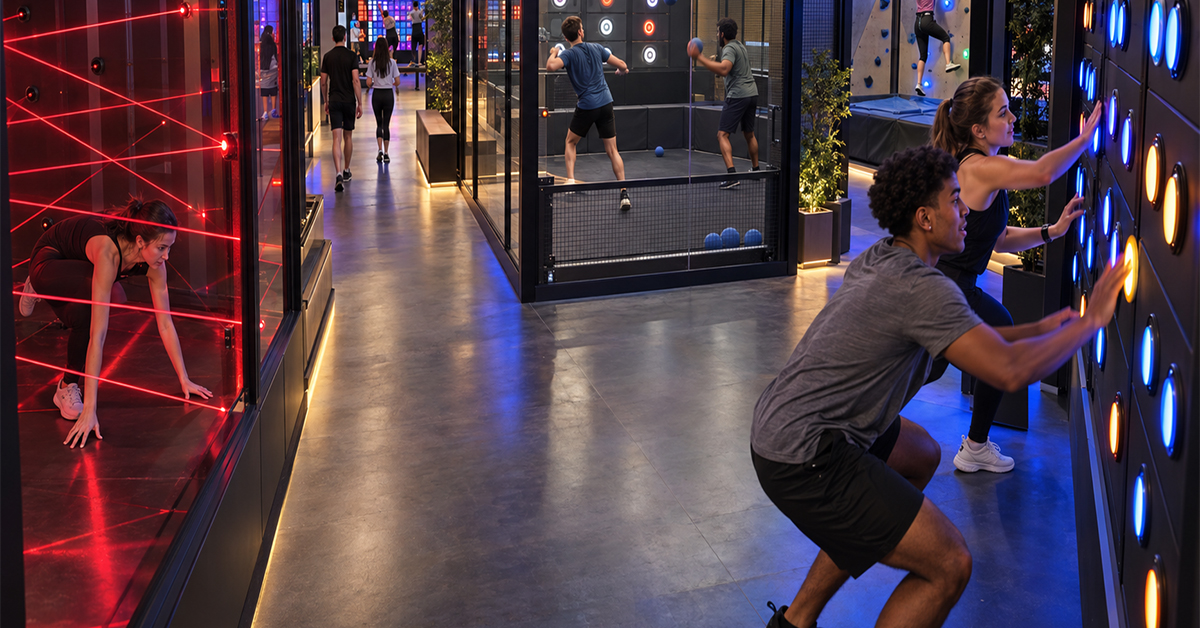
In a multi-attraction venue, active gaming operates alongside existing activities such as bowling, trampolines, arcade games or escape rooms.
It can take the form of a small dedicated zone or a larger collection of challenge rooms. The right scale depends on the available space, target audience, operating model and project budget.
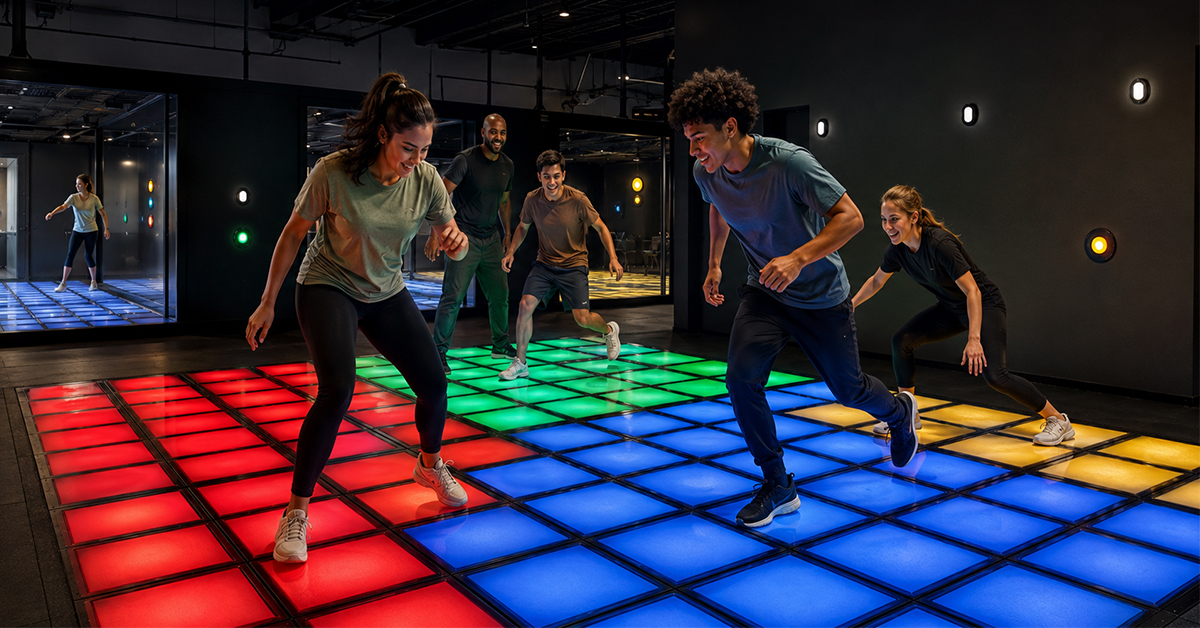
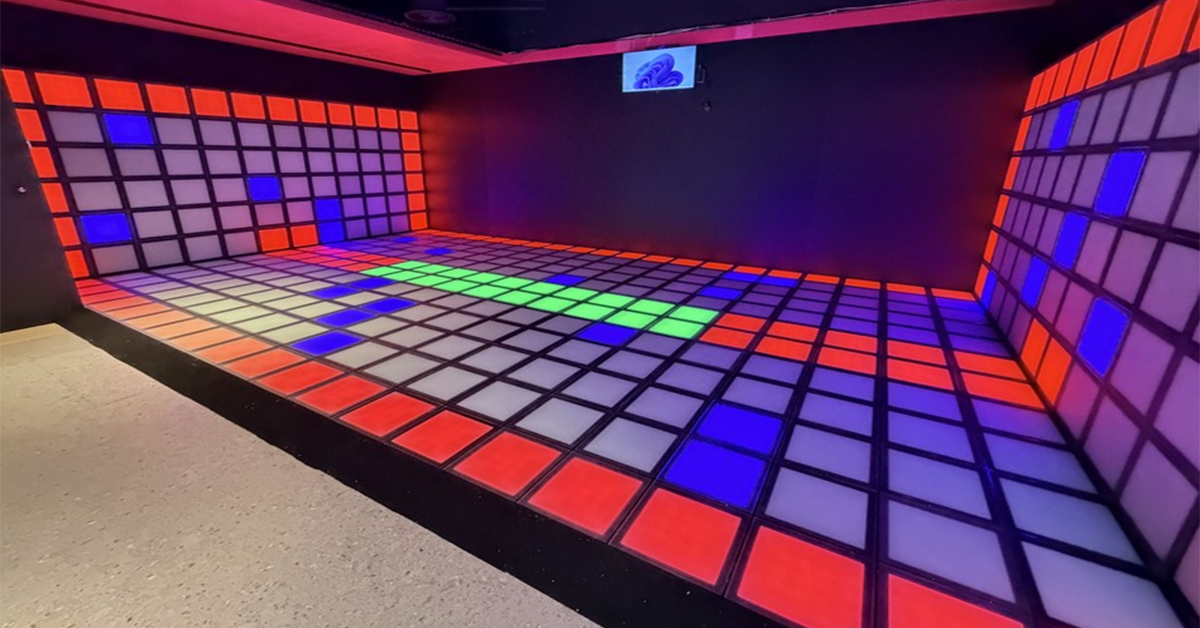
The important distinction is how guests participate. An interactive challenge room gives the group a task to complete together, with the physical environment becoming part of the game.
Why This Expansion Fits the 2026 Leisure Conversation
Multi-activity entertainment is receiving increased attention as operators look for ways to serve different occasions within one destination.
Savills’ 2026 UK research identifies the growth of venues combining several competitive socialising activities. Its October analysis also discusses family entertainment formats that bring physical activity, gaming and hospitality together. These are UK market observations, rather than a forecast for every location.
For an individual operator, the practical implication is straightforward: assess whether a new activity makes the overall visit more appealing.
An active gaming addition could give an existing customer a second activity to book. It could also create an offer for groups who are interested in interactive challenges but less interested in the venue’s original attraction.
Both possibilities should be tested against local demand.
Start With the Occasion You Want to Serve
Before choosing equipment, define the booking occasion.
A family visiting on Saturday afternoon has different expectations from a company organising an evening team event. A birthday organiser needs a clear schedule. A group of friends may care more about friendly competition and trying several activities.
The same game room will not automatically meet every requirement.
|
Existing venue |
Possible role for active gaming |
Planning priority |
|
Bowling centre |
An additional group activity before or after bowling |
Coordinate lane bookings and challenge sessions |
|
Trampoline park |
A separate experience based on reaction, precision and problem-solving |
Check audience suitability and activity transitions |
|
Arcade or FEC |
A dedicated team experience alongside individual games |
Make access, session length and pricing easy to understand |
|
Escape room venue |
A complementary format built around physical and interactive challenges |
Explain how the experience differs from the existing offer |
|
Shopping mall entertainment venue |
A visible, bookable activity for friends and families |
Plan entrances, circulation and sound control |
These are possible applications, not guaranteed business outcomes. The best fit depends on the venue’s customers and operating conditions.
Choose Rooms That Add Variety
An expansion should bring a useful change of pace.
If the existing venue already offers intensive physical activity, consider whether reaction, observation or precision challenges would create a more balanced visit. If the venue is mainly sedentary, movement-based rooms may introduce a stronger contrast in the guest experience.
A proposed room mix might include:
· Movement challenges: interactive grid games requiring players to respond to changing floor signals.
· Reaction challenges: illuminated targets or buttons that test timing and attention.
· Precision challenges: aiming or ball-based activities with clearly defined objectives.
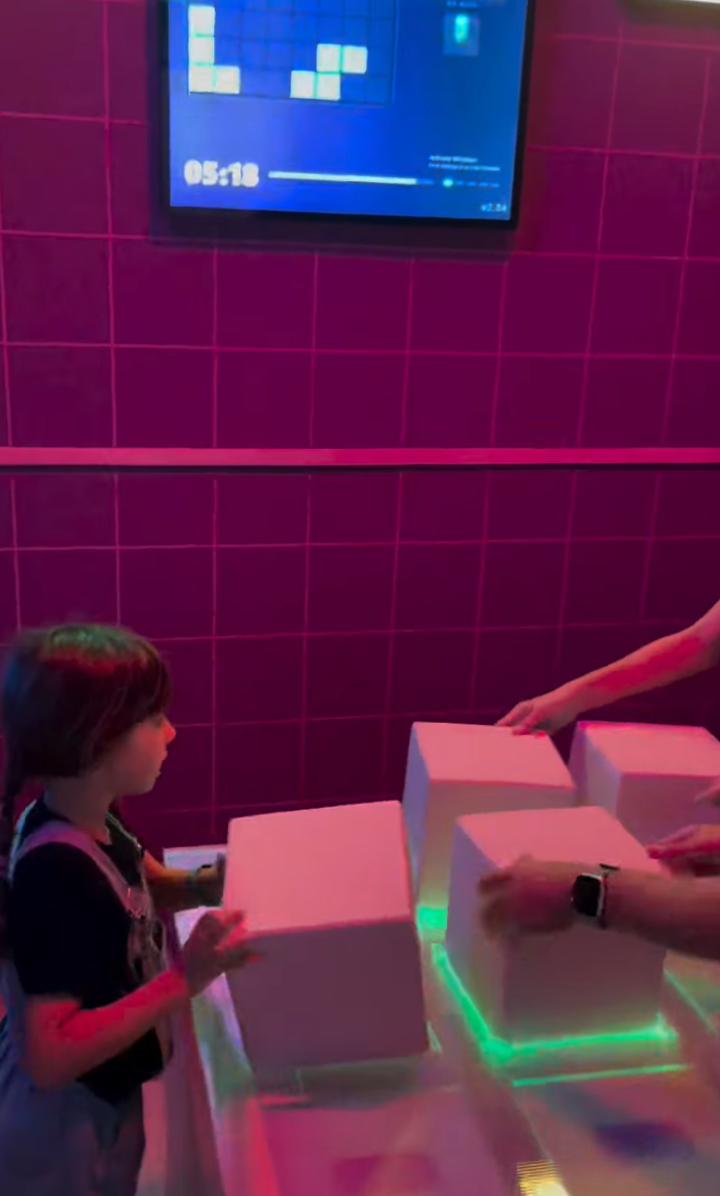
· Thinking challenges: tasks involving observation, patterns or coordinated decisions.
Select the combination around the intended audience. Review each room’s actual rules, physical demands, player limits and supervision requirements.
A smaller, coherent selection can be easier to explain and operate than a larger collection with overlapping experiences.
Design the Guest Journey Before Finalising the Layout
Imagine a group arriving for two activities.
They need to know where to check in, which activity comes first, where to leave their belongings and what happens if the first session runs late.
These details influence whether a package feels convenient.
Map the journey from arrival to departure:
Booking and arrival instructions.
Check-in and activity confirmation.
Belongings storage and safety briefing.
Entry into the first activity.
Transition to the next activity.
Results, group photos and departure.
Then review the physical layout against that journey.
Can guests find the active gaming entrance? Is there enough space for a briefing without blocking circulation? Can staff observe the relevant areas? Are emergency routes and service access preserved?
Equipment footprints alone do not answer these questions.
Make the Booking Offer Easy to Understand
Customers should be able to understand what they are buying before payment.
For a combined package, explain:
· Which activities are included.
· How long each activity lasts.
· Whether the activities run in a fixed order.
· How early the group should arrive.
· Applicable age, height or participation restrictions.
· How delays, cancellations and unavailable activities are handled.
A bowling-plus-challenge package, for example, needs a realistic transition between the two activities. A birthday package needs time for the briefing, gameplay and any separate party arrangements.
Confirm what the booking software can support. Shared ticketing, player identification and scoring integration should be specified and tested when included in the project scope.
Evaluate Capacity Across the Whole Experience
Active gaming capacity depends on the full activity cycle: briefing, gameplay, exit, reset and any required staff intervention.
The published player limit for a room is only one input.
For scheduled group rotation, a useful starting calculation is:
Theoretical hourly capacity = players per group × 60 ÷ total cycle time in minutes.
Treat the result as a planning estimate. Actual capacity may be lower because of late arrivals, uneven room demand, maintenance or groups needing additional assistance.
For free-choice access, evaluate how guests distribute themselves between rooms. One popular challenge can become a bottleneck even when other rooms have space.
Ask suppliers to explain the operating assumptions behind every capacity estimate.
Review the Operating Requirements Early
A visually impressive attraction still needs to work through ordinary operating days.
Before confirming an expansion, ask practical questions:
|
Area |
Questions to resolve |
|
Staffing |
Who briefs guests, supervises participation and responds to faults? |
|
Maintenance |
How are components accessed, inspected and replaced? |
|
Cleaning |
Which surfaces need cleaning, and how does this fit between sessions? |
|
Software |
What happens after a restart, connection issue or interrupted game? |
|
Content |
Which game modes are supplied, and what updates are included? |
|
Installation |
Who handles building work, wiring, commissioning and training? |
|
Support |
What remote assistance, documentation and spare parts are provided? |
Document the answers in the quotation and project scope. Clear responsibilities make it easier to compare proposals and prepare for opening.
Measure Whether the Expansion Works
Once the attraction opens, assess it against the purpose you defined.
Useful measures include combined-package purchases, room utilisation, waiting times, downtime and guest feedback about the complete visit.
Track performance by session and booking type where possible. A room that performs well for birthday groups may need a different offer for weekday visitors.
Financial evaluation should include equipment, fit-out, staffing, maintenance, software charges where applicable and the value of the space being used.
There is no universal payback period for an active gaming expansion. A credible business case uses local pricing, realistic attendance assumptions and the full operating cost.
Planning an Active Gaming Addition With Kydavrplay
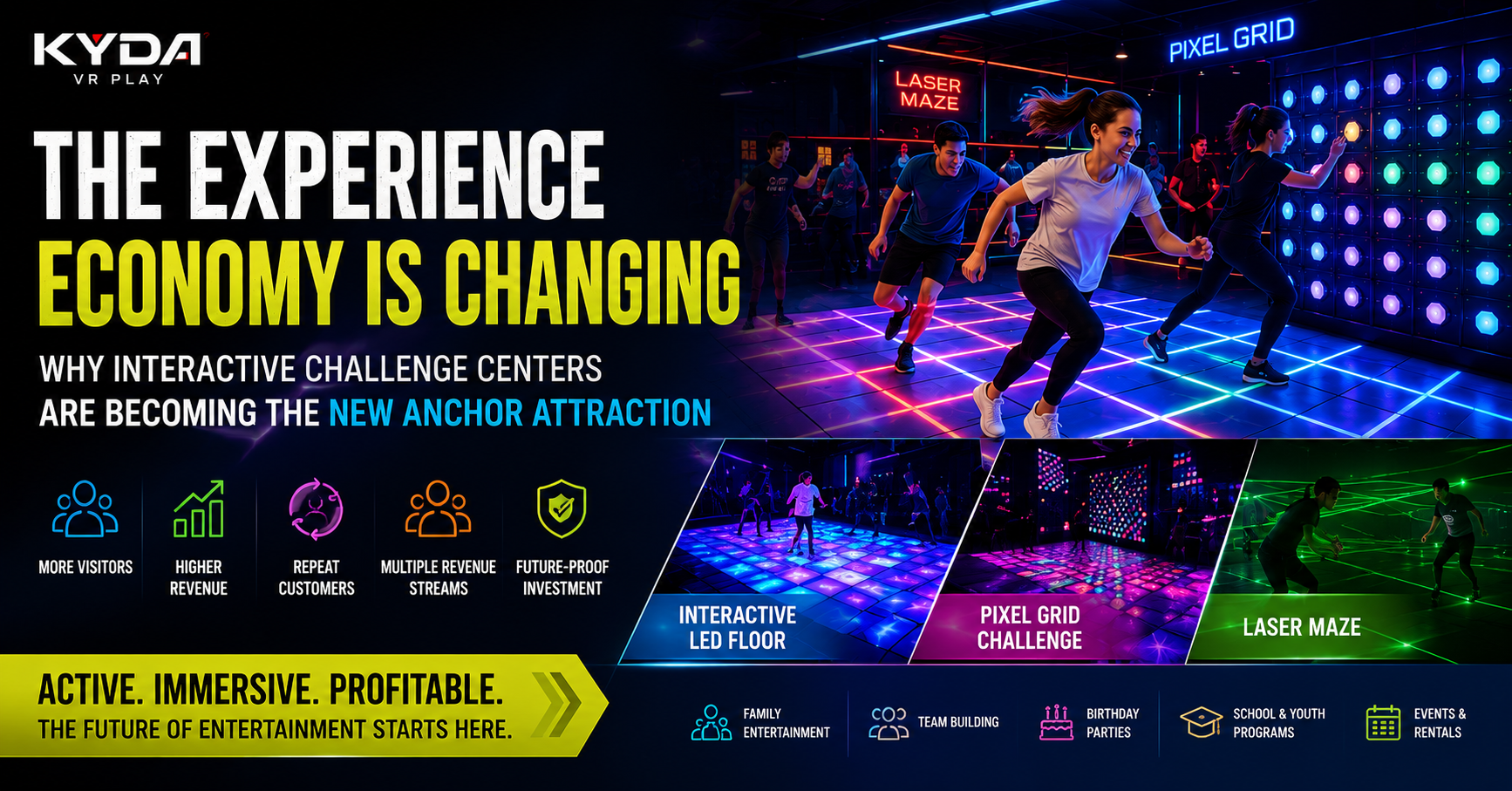
Kydavrplay’s product range includes interactive grid games, laser challenges, reaction games, ball-based activities and other challenge-room concepts. This gives operators several categories to consider when developing a complementary attraction mix.
The starting point should be your venue brief.
Share your existing activities, available floor plan, clear ceiling height, target audience and intended booking model. Include any restrictions on access, sound, power or installation timing.
From there, discuss room suitability, layout requirements and the proposed equipment and software scope.
Planning an expansion? Contact Kydavrplay with your floor plan and existing attraction list to discuss an active gaming combination suited to your venue.